
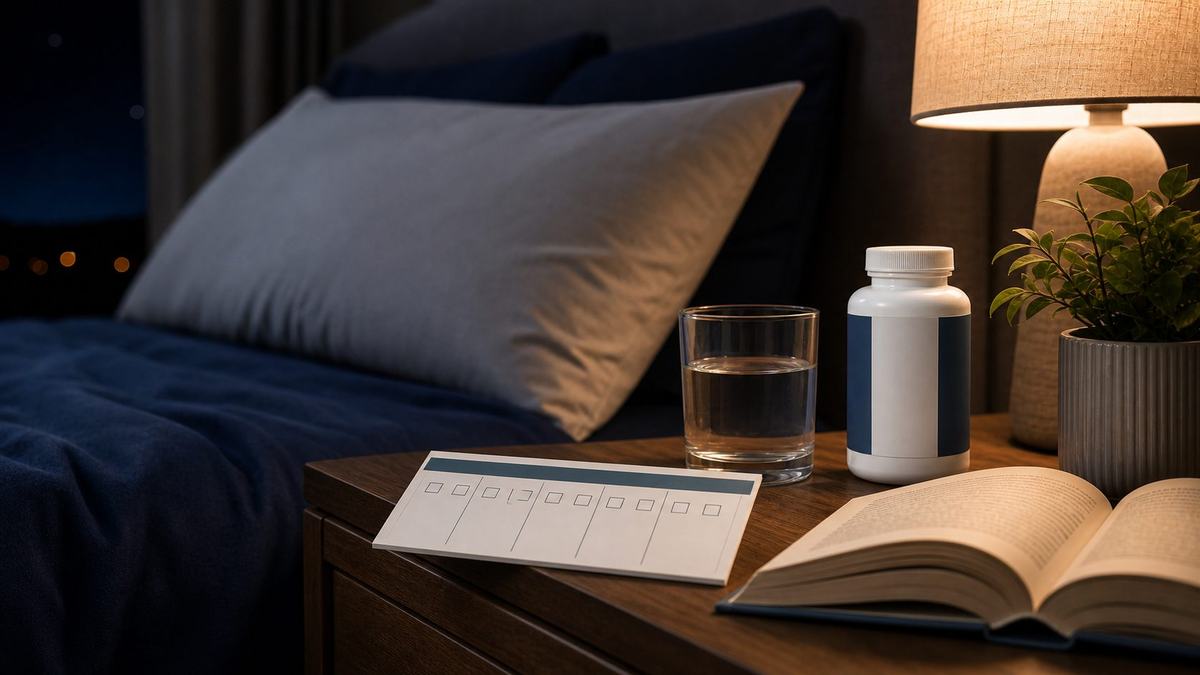
Can You Take Magnesium Glycinate Every Night?
Yes, many people can take magnesium glycinate every night when they use it responsibly and follow the product label.
The Simple Answer
For most healthy adults, magnesium glycinate can fit well into a nightly routine.
People often take it before bed because magnesium supports normal muscle function, nerve function, and relaxation-related processes. The glycinate form is popular because it is bound to glycine and is commonly considered one of the gentler magnesium options.
A simple nightly routine might look like this:
- Take magnesium glycinate with water.
- Dim the lights.
- Reduce screen time.
- Read, stretch, or journal.
- Go to bed at a consistent time.
This routine matters because magnesium glycinate is not a sleeping pill. It works best when it supports a calm pattern you repeat every night.
Magnesium glycinate can be taken nightly by many healthy adults, but it works best as part of a consistent bedtime routine.
Nightly Use Is Different From High-Dose Use
Taking magnesium glycinate every night does not mean taking a high serving every night.
This is an important distinction. A consistent, moderate routine is different from taking more and more because you want a stronger effect. More magnesium does not automatically mean better sleep, better recovery, or deeper relaxation. It may only increase the chance of digestive side effects.
The better approach is:
- Start with a low serving.
- Use it consistently.
- Watch how your body responds.
- Increase only if the label allows and you tolerate it.
- Scale back if side effects appear.
Nightly consistency is useful, but aggressive dosing is not the goal.
Why Magnesium Glycinate Is a Good Nighttime Form
Magnesium glycinate is often chosen at night because it is gentle and routine-friendly.
Compared with magnesium citrate, it is less digestion-focused. Compared with magnesium oxide, it is usually more sleep-routine focused. That makes glycinate one of the best magnesium forms for people who want a calm supplement before bed without a strong laxative effect.
Magnesium glycinate may be especially useful if you want support for:
- A calmer bedtime routine
- Muscle relaxation
- Nighttime recovery
- General magnesium intake
- Sleep consistency
- A gentle daily supplement habit
Magnesium glycinate is one of the most practical magnesium forms for nightly use because it fits the sleep and relaxation category well.
The answer is yes for many people, but the safest nightly magnesium routine is gradual, label-based, and side-effect aware.
Why Take Magnesium Glycinate at Night?
Nighttime is the most popular time because magnesium glycinate fits naturally into a wind-down routine.
It Supports a Calmer Evening Routine
Magnesium glycinate is often used at night because people want help winding down.
This does not mean it forces sleep. It means it can support a calmer routine when paired with better sleep habits. If your night is full of bright screens, work stress, late caffeine, and inconsistent bedtimes, magnesium glycinate may not feel like much. But if you combine it with a true wind-down routine, it can become a useful part of the pattern.
A better evening routine includes:
- Taking magnesium glycinate at the same time each night
- Lowering light exposure
- Reducing phone use
- Avoiding late caffeine
- Keeping the bedroom cool and dark
- Going to bed at a similar time
Magnesium glycinate works best at night when the rest of your routine also supports sleep.
It May Support Muscle Relaxation and Recovery
Magnesium supports normal muscle and nerve function.
That is one reason people often take magnesium glycinate after active days, workouts, long work hours, or periods of physical tension. It is commonly used in nighttime recovery routines because sleep is when much of the body's repair and restoration happens.
A simple recovery routine might include:
- Hydration
- Protein at dinner
- Light stretching
- Magnesium glycinate
- Consistent bedtime
- Enough total sleep
Magnesium glycinate does not replace protein, hydration, or rest. It supports the broader recovery routine.
Magnesium glycinate may support muscle recovery best when paired with sleep, hydration, and smart training habits.
It Helps Build Consistency
A supplement is more useful when you remember to take it.
Nightly routines are powerful because they repeat. If you take magnesium glycinate after brushing your teeth or with your evening water, the habit becomes easier to remember. Instead of randomly taking magnesium whenever you think of it, you give it a fixed place in your day.
Examples of strong timing cues:
- After dinner
- After brushing your teeth
- When you turn down the lights
- Before reading
- Before your phone goes away
- 30 to 60 minutes before bed
Nightly use works because the routine becomes repeatable.
Taking magnesium glycinate at night makes sense when you want sleep support, relaxation, recovery, and consistency.
How Much Magnesium Glycinate Should You Take Every Night?
The best nightly amount depends on the label, elemental magnesium per capsule, your tolerance, and your total magnesium intake.
Start Low First
A smart magnesium routine should start low.
If you are new to magnesium glycinate, do not begin with the highest serving. Even though magnesium glycinate is often gentle, your body may still need time to adjust. Starting low helps you learn how you tolerate it before increasing.
A practical beginner approach:
- Start with one capsule nightly if that matches your product label.
- Stay there for about one week.
- Watch digestion, sleep, and how you feel in the morning.
- Increase only if the label allows and you tolerate it well.
- Scale back if you get loose stool, diarrhea, nausea, or cramping.
This is especially important if your capsule provides a meaningful amount of elemental magnesium.
The best magnesium glycinate routine usually starts with the lowest practical serving.
Example: If One Capsule Provides 175 mg Magnesium
If your magnesium glycinate capsule provides 175 mg of elemental magnesium, one capsule is already a real serving.
A gradual approach may look like this:
| Week | Example Nightly Use | Notes |
|---|---|---|
| Week 1 | 1 capsule | Test tolerance first |
| Week 2 | 2 capsules if tolerated and label allows | Watch digestion closely |
| Ongoing | Stay at the lowest effective amount | Do not chase higher servings |
If one capsule is 175 mg elemental magnesium, two capsules would provide 350 mg supplemental magnesium. That is already the commonly listed adult upper limit for magnesium from supplements and medications unless a healthcare professional recommends otherwise.
That does not mean everyone must stop at exactly that amount in every circumstance, but it does mean higher servings should not be treated casually or recommended as a default starting point.
If each capsule contains 175 mg elemental magnesium, one capsule is a reasonable cautious start and two capsules is already a substantial supplemental amount.
Do Not Assume More Is Better
More magnesium does not automatically mean better sleep.
If one capsule helps your routine, you may not need more. If two capsules cause loose stool, stomach discomfort, or morning grogginess, scale back. The right amount is not the largest amount you can tolerate. The right amount is the amount that supports your routine without creating side effects.
Good signs your serving may be too high:
- Loose stool
- Diarrhea
- Nausea
- Stomach cramping
- Abdominal discomfort
- Feeling unusually off
- Waking up uncomfortable
Magnesium glycinate should make your routine easier, not create new problems.
For nightly use, start low, increase slowly only if appropriate, and stay at the lowest effective serving.
What Happens If You Get Diarrhea From Magnesium Glycinate?
Diarrhea usually means your dose, timing, or total magnesium intake needs to be reduced.
Why Magnesium Can Cause Loose Stool
Magnesium supplements can cause loose stool because unabsorbed magnesium can pull water into the intestines.
Magnesium glycinate is often gentler than citrate or oxide, but it can still cause digestive issues, especially if you take a high serving or combine it with other magnesium products.
You may be more likely to get diarrhea if:
- You take too much too quickly.
- You increase the serving before your body adjusts.
- You take magnesium on an empty stomach.
- You combine magnesium glycinate with citrate or oxide.
- You also use magnesium-containing antacids or laxatives.
- You have a sensitive digestive system.
Loose stool is usually a sign to scale back, not push harder.
What to Do If It Happens
If magnesium glycinate gives you diarrhea, reduce the serving.
A simple response:
- Stop increasing the dose.
- Return to the last serving you tolerated.
- Take it with food if the label allows.
- Check other supplements for magnesium.
- Drink enough fluids.
- Ask a healthcare professional if symptoms continue.
Do not treat diarrhea as proof that magnesium is "working." It is usually a side effect, not the goal.
If diarrhea happens, scale back and reassess your total magnesium intake.
Give Your Body Time to Adjust, But Do Not Ignore Side Effects
Some people may tolerate magnesium better after starting slowly.
That does not mean you should push through repeated diarrhea. Your body may need a slower ramp-up, but ongoing digestive symptoms are a sign that the serving may not be right for you.
A better mindset is:
Start low.
Increase slowly.
Listen closely.
Scale back quickly.
Gradual use is smart, but persistent side effects mean the routine should change.
Diarrhea is one of the clearest signs that your magnesium glycinate serving may be too high or increasing too quickly.
Is It Safe to Take Magnesium Glycinate Long Term?
Long-term nightly use may be appropriate for many people, but it depends on health status, medications, and total magnesium intake.
Long-Term Use Should Be Label-Based
If you plan to take magnesium glycinate every night, the label matters.
Check the Supplement Facts panel for:
- Serving size
- Elemental magnesium per serving
- Suggested use
- Warnings
- Other ingredients
- Servings per container
Do not rely only on front-label claims like "sleep," "calm," or "high absorption." The Supplement Facts panel tells you what you are actually taking.
Long-term nightly use should begin with the Supplement Facts panel.
Count All Magnesium Sources
If you take magnesium glycinate every night, count other magnesium products too.
Magnesium may appear in:
- Multivitamins
- Electrolyte powders
- Greens powders
- Sleep blends
- Mineral complexes
- Antacids
- Laxatives
- Other magnesium supplements
This matters because your body does not care which bottle the magnesium came from. Total supplemental magnesium is what matters.
Long-term magnesium safety depends on total supplemental intake, not just one product.
Kidney Health Matters
Kidney health is one of the biggest safety factors.
Healthy kidneys help remove excess magnesium. If kidney function is impaired, magnesium can build up and become dangerous. People with kidney disease or reduced kidney function should not take magnesium glycinate nightly without medical guidance.
Anyone with kidney disease should ask a healthcare professional before taking magnesium glycinate every night.
Long-term magnesium glycinate can be reasonable for many people, but only when dosage, total intake, and kidney health are considered.
Who Should Ask a Doctor Before Taking Magnesium Glycinate Every Night?
Some people should get personalized guidance before nightly use.
People With Kidney Disease
Kidney disease changes the safety picture.
Because the kidneys help remove excess magnesium, reduced kidney function can increase the risk of magnesium buildup. This can become serious. If you have kidney disease, reduced kidney function, or abnormal kidney labs, ask a doctor before taking magnesium glycinate nightly.
Kidney disease is one of the clearest reasons to avoid unsupervised nightly magnesium.
People Taking Prescription Medications
Magnesium can interact with certain medications.
This can include some antibiotics, osteoporosis medications, diuretics, and medications that affect magnesium balance. Magnesium can also reduce absorption of certain medications if taken too close together.
Ask a pharmacist or doctor if you take:
- Tetracycline antibiotics
- Quinolone antibiotics
- Oral bisphosphonates
- Diuretics
- Proton pump inhibitors
- Heart medications
- Blood pressure medications
- Any medication with strict timing instructions
Medication timing is a major reason to ask a pharmacist before nightly magnesium.
Pregnant or Breastfeeding Individuals
Pregnancy and breastfeeding change nutrient needs and safety considerations.
If you are pregnant or breastfeeding, ask a healthcare professional before adding magnesium glycinate, especially if you already take a prenatal vitamin or other mineral supplements.
Pregnant or breastfeeding individuals should get personalized guidance before nightly magnesium use.
People Taking Multiple Supplements
If you take several supplements, magnesium may already be in your routine.
Before adding nightly magnesium glycinate, check every label. This includes multivitamins, sleep supplements, electrolyte powders, greens powders, and mineral blends.
A simple supplement check:
- Find "Magnesium" on each label.
- Write down the amount per serving.
- Add the total supplemental magnesium.
- Compare that with your magnesium glycinate serving.
- Ask a professional if the total is high or unclear.
Multiple supplements can quietly push magnesium intake higher than intended.
Ask a doctor or pharmacist first if you have kidney concerns, take medications, are pregnant or breastfeeding, or use multiple supplements.
How to Take Magnesium Glycinate Every Night
The best nightly routine is simple and consistent.
Choose a Repeatable Time
Pick a time you can actually follow.
Many people take magnesium glycinate 30 to 60 minutes before bed, but you do not have to be exact. The best timing is the timing you can repeat. If after dinner is easier than right before bed, choose after dinner.
Good timing options:
- After dinner
- After brushing your teeth
- When you dim the lights
- Before reading
- 30 to 60 minutes before bed
- During your evening wind-down routine
The best time is the time that makes nightly use automatic.
Take It With Water
Keep the habit easy.
Put your magnesium glycinate near your evening routine and take it with water. If the label suggests taking it with food, follow that. If your stomach is sensitive, taking it after dinner may be easier than taking it on an empty stomach.
Water and a consistent location make nightly magnesium easier to remember.
Pair It With Sleep Hygiene
Magnesium glycinate works better when your sleep routine also makes sense.
A strong routine includes:
- Less late caffeine
- Lower light at night
- Less scrolling in bed
- A cool, dark room
- A consistent bedtime
- A consistent wake time
- Magnesium glycinate as one part of the routine
Do not expect magnesium to cancel out a chaotic night. It supports the system. It does not replace the system.
Magnesium glycinate works best when it supports good sleep habits.
Track Your Response
Track how you feel for the first few weeks.
Pay attention to:
- Sleep onset
- Night waking
- Morning energy
- Muscle tension
- Digestive comfort
- Stool changes
- Consistency taking it
This helps you find the right serving and timing.
Tracking helps you find the serving that actually works for your body.
A good nightly magnesium routine is steady, simple, and easy to evaluate.
Can You Take Magnesium Glycinate Every Night for Sleep?
Yes, many people take magnesium glycinate every night for sleep routines.
It May Help Support a Calmer Bedtime
Magnesium glycinate is often used before bed because it fits a calm routine.
People may notice:
- Easier wind-down
- Less physical tension
- More consistent bedtime
- Better evening routine
- Improved sleep habits over time
But it should not be expected to knock you out. Magnesium glycinate does not work like a sedative. It may support the routine, but it does not force sleep.
Magnesium glycinate may support sleep by helping make the bedtime routine calmer and more consistent.
It Works Best With Routine, Not Random Use
Taking magnesium glycinate randomly is less useful than taking it consistently.
A nightly pattern gives your body and mind a signal that the day is ending. Over time, this can support the habit of winding down.
A simple sleep routine:
- Take magnesium glycinate.
- Turn down lights.
- Put phone away.
- Read or stretch.
- Keep the room cool.
- Sleep at a consistent time.
Magnesium glycinate is best used as part of a repeated sleep cue.
Do Not Use It to Cover Up Serious Sleep Issues
If you have severe or ongoing sleep problems, ask a healthcare professional.
Magnesium glycinate should not be used to ignore symptoms like:
- Loud snoring
- Waking up gasping
- Severe insomnia
- Chest pain
- Irregular heartbeat
- Extreme daytime sleepiness
- Restless legs symptoms
- Sleep problems lasting weeks or months
Magnesium glycinate can support sleep routines, but persistent sleep problems deserve proper evaluation.
Magnesium glycinate can be taken nightly for sleep by many people, but it should support good sleep habits rather than replace medical care.
Common Mistakes With Nightly Magnesium Glycinate
Most problems come from taking too much, too quickly, or without checking other magnesium sources.
Mistake 1: Starting Too High
Do not begin with a large serving.
If you are new to magnesium glycinate, start low and give your body time to adjust. Beginning with several capsules may increase the risk of diarrhea, nausea, or cramping.
Start low before assuming you need a higher nightly serving.
Mistake 2: Ignoring Elemental Magnesium
Elemental magnesium is the actual magnesium amount.
A label may say magnesium glycinate, but you still need to know how much elemental magnesium is in each serving. If one capsule contains 175 mg magnesium, that is very different from one capsule containing 50 mg.
Elemental magnesium tells you what you are really taking.
Mistake 3: Taking Multiple Magnesium Products
Do not forget hidden magnesium sources.
Your magnesium glycinate may not be the only magnesium in your routine. Check multivitamins, sleep blends, electrolyte drinks, antacids, laxatives, and mineral complexes.
Multiple magnesium products can add up quickly.
Mistake 4: Increasing the Dose After Diarrhea
If diarrhea appears, do not increase the dose.
Scale back. Diarrhea usually means your body is not tolerating the current amount or combination. Increasing may make it worse.
Loose stool is a signal to reduce, not increase.
Mistake 5: Expecting Instant Sleep
Magnesium glycinate is not a knockout supplement.
Some people feel calmer quickly. Others notice changes gradually. Some may not notice a dramatic effect at all. The goal is to support a steady sleep routine.
Magnesium glycinate should be judged over time, not from one night.
Avoiding these mistakes makes nightly magnesium glycinate more useful and more comfortable.
Conclusion: Yes, You Can Take Magnesium Glycinate Every Night if You Use It Wisely
Many healthy adults can take magnesium glycinate every night, especially as part of a sleep, relaxation, or muscle recovery routine. The best approach is to start low, follow the label, and increase slowly only if needed and tolerated. If your capsule provides 175 mg elemental magnesium, one capsule is a cautious starting point, and two capsules is already a substantial nightly serving. If loose stool, diarrhea, nausea, or cramping appears, scale back. Magnesium glycinate is gentle for many people, but it is still a supplement that should be used responsibly. People with kidney disease, prescription medications, pregnancy or breastfeeding, or multiple magnesium-containing products should ask a healthcare professional before making it a nightly habit.



Comments
Comments are coming soon. For now, send product questions to our support team and we will help you decide whether magnesium glycinate makes sense for your routine.