

Is Magnesium Glycinate Good for Sleep?
Magnesium glycinate may be good for sleep routines, but it should be understood as support, not a guaranteed sleep solution.
The Simple Answer
Yes, magnesium glycinate can be a good option for people who want to support a calmer nighttime routine.
It is commonly used before bed because it provides magnesium in a form many people find gentle. That matters because some other magnesium forms, such as magnesium citrate or magnesium oxide, may be more likely to affect digestion. A sleep supplement should not create stomach discomfort, urgency, or a reason to wake up during the night.
Magnesium glycinate may support:
- Normal muscle function
- Normal nerve function
- Relaxation routines
- Nighttime muscle comfort
- Healthy magnesium intake
- A consistent wind-down habit
The key is phrasing. Magnesium glycinate may support sleep routines. It does not force sleep.
Magnesium glycinate is good for many sleep routines because it is gentle, nighttime-friendly, and easy to use consistently.
Does Magnesium Glycinate Help Sleep?
Magnesium glycinate may help some people sleep better, especially if low magnesium intake, muscle tension, or an inconsistent bedtime routine is part of the problem.
However, it is not a universal fix. If your sleep issues are caused by late caffeine, irregular bedtimes, sleep apnea, alcohol, stress, pain, or heavy screen use, magnesium glycinate may not solve the root issue by itself.
A better way to think about it:
Magnesium glycinate can support the conditions that make sleep easier.
Those conditions may include a calmer nervous system routine, less physical tension, better sleep habits, and a consistent bedtime signal.
Magnesium glycinate may help sleep indirectly by supporting relaxation and a better nighttime routine.
Does Magnesium Glycinate Help You Sleep Right Away?
Some people may feel calmer the first night they take magnesium glycinate, but others may need consistent use over time.
Magnesium glycinate does not usually work like a fast-acting sleep medication. It is better evaluated over several nights or weeks. If you take it once and sleep poorly, that does not automatically mean it failed. If you take it once and sleep well, that does not automatically prove it was the only reason.
Sleep is affected by many variables, including:
- Caffeine timing
- Stress
- Screen use
- Room temperature
- Exercise
- Alcohol
- Meal timing
- Bedtime consistency
Magnesium glycinate is best judged as part of a repeated sleep routine, not from one night.
Magnesium glycinate can be a strong sleep-routine supplement, but it should be used with realistic expectations.
What the Research Says About Magnesium and Sleep
Research on magnesium for sleep is promising in some areas, but not strong enough to call it a guaranteed sleep aid.
The Evidence Is Mixed
Magnesium is widely discussed for sleep, but the research is still limited.
Some studies suggest magnesium supplementation may improve sleep onset or certain sleep measures, especially in older adults or people with low magnesium intake. Other reviews find that observational studies connect magnesium status with sleep quality, while randomized clinical trials remain less certain.
That means the honest answer is not "magnesium definitely makes you sleep."
The more accurate answer is:
Magnesium may support sleep for some people, but the evidence is not conclusive.
Magnesium has sleep-support potential, but the evidence should be described as limited and mixed.
Most Research Is Not Specifically on Magnesium Glycinate
Another important point: not all magnesium sleep research is specifically about magnesium glycinate.
Some studies use magnesium oxide, magnesium citrate, or other magnesium forms. Others look at magnesium intake or magnesium status generally. This matters because magnesium glycinate is popular for sleep mostly because of its practical qualities: it is gentle, commonly taken at night, and paired with glycine.
So when people ask, "Is magnesium glycinate good for sleep?" the answer combines two ideas:
- Magnesium may support sleep-related processes.
- Glycinate is often a practical form to take before bed.
Magnesium glycinate is popular for sleep, but not all sleep research is specific to the glycinate form.
Why People Still Use It
People continue using magnesium glycinate for sleep because it fits the routine well.
A supplement does not have to feel dramatic to be useful. If magnesium glycinate helps someone start a wind-down routine, take a nightly pause, reduce tension, and stay consistent, that can be valuable.
A magnesium glycinate sleep routine may help people:
- Build consistency
- Stop relying on random supplement timing
- Pair sleep support with lower lights
- Create a repeated bedtime signal
- Support normal muscle and nerve function
- Avoid harsher magnesium forms before bed
Magnesium glycinate remains popular because it is practical, gentle, and easy to pair with bedtime habits.
The research is not definitive, but magnesium glycinate can still be a reasonable tool for a calmer sleep routine.
How Magnesium Glycinate May Support Sleep
Magnesium glycinate may support sleep by helping the body maintain normal magnesium-dependent functions.
Supports Normal Muscle and Nerve Function
Magnesium is involved in normal muscle and nerve function.
This is one reason people use magnesium glycinate before bed. If your body feels tense at night, a magnesium routine may help support the normal function of muscles and nerves. This does not mean it will cure cramps, pain, or insomnia. It means magnesium is part of the body's normal relaxation and neuromuscular systems.
Magnesium glycinate may be useful for people who feel:
- Physically tense at night
- Restless before bed
- Tight after workouts
- Inconsistent with recovery routines
- Low in magnesium-rich foods
Magnesium glycinate may support sleep by supporting normal muscle and nerve function.
Supports a Calmer Nighttime Routine
A consistent bedtime routine can make sleep easier.
Magnesium glycinate works best when it is part of a larger wind-down sequence. The supplement becomes one cue in the routine, not the entire routine.
A simple magnesium glycinate sleep routine might look like this:
- Take magnesium glycinate with water.
- Dim the lights.
- Stop work for the night.
- Reduce screen time.
- Read, stretch, or journal.
- Go to bed at a consistent time.
This kind of routine gives your body repeated signals that the day is ending.
Magnesium glycinate may support sleep best when it becomes part of a calming routine.
May Help If Magnesium Intake Is Low
Some people may benefit more from magnesium glycinate if they do not get enough magnesium from food.
Magnesium-rich foods include nuts, seeds, legumes, whole grains, leafy greens, milk, yogurt, and fortified foods. If these foods are not part of your normal diet, a magnesium supplement may be more noticeable.
That does not mean everyone is deficient. It means magnesium intake is worth considering if your diet is low in magnesium-rich foods.
Magnesium glycinate may be more useful for sleep routines when it helps fill a real magnesium intake gap.
Magnesium glycinate may support sleep through muscle function, nerve function, relaxation routines, and better magnesium intake.
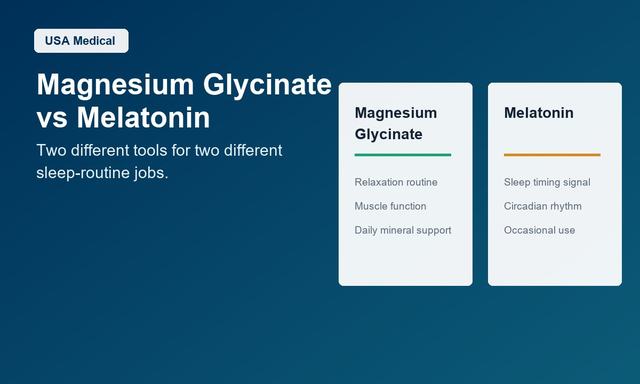
Magnesium Glycinate vs Other Magnesium Forms for Sleep
Magnesium glycinate is often preferred for sleep because it is gentle and bedtime-friendly.
Magnesium Glycinate vs Citrate
Magnesium citrate is another common magnesium form.
It can be useful for magnesium support and occasional bowel regularity, but it may be more likely to loosen stool. That can be helpful if digestion is the goal, but less helpful if sleep is the goal.
For sleep routines, magnesium glycinate is usually the better fit because it is less digestion-focused and more commonly used before bed.
Magnesium glycinate is usually better than citrate for sleep if digestive comfort matters.
Magnesium Glycinate vs Oxide
Magnesium oxide is common and often inexpensive.
It may appear in antacid or digestive-related products, but it is usually not the first magnesium form people choose for sleep or relaxation. If your goal is a calm bedtime routine, magnesium glycinate is generally the more targeted option.
Magnesium glycinate is usually more sleep-focused than magnesium oxide.
Why Glycinate Is Often Called the Best Magnesium for Sleep
Magnesium glycinate earns its sleep-friendly reputation because of the combination of magnesium, glycine, and gentleness.
It is not that glycinate magically makes you sleep. It is that it fits the sleep category better than many other magnesium forms. It is easy to take at night, commonly well tolerated, and less likely to be chosen for digestive urgency.
For a full guide, read: Magnesium Glycinate for Sleep
Magnesium glycinate is often the best magnesium for sleep routines because it is gentle and practical.
For sleep-focused use, magnesium glycinate is usually the first form to consider.
When to Take Magnesium Glycinate for Sleep
Many people take magnesium glycinate in the evening, often 30 to 60 minutes before bed.
Take It During Your Wind-Down Routine
The best time to take magnesium glycinate is the time you can repeat consistently.
For sleep, this is usually during your evening wind-down. Some people take it after dinner. Others take it after brushing their teeth or before reading. The exact timing is less important than building a routine that actually happens most nights.
Good timing options include:
- After dinner
- After brushing your teeth
- When you dim the lights
- Before reading
- 30 to 60 minutes before bed
Magnesium glycinate is commonly taken before bed, but consistency matters more than exact timing.
Do Not Wait Until You Are Already Exhausted
If you wait too late, you may forget.
Many people plan to take magnesium right before bed but skip it because they are already tired. A better approach is taking it when your evening routine begins.
Instead of taking it after you are already in bed, consider taking it:
- After dinner
- Before your phone goes away
- Before reading
- Before stretching
- When you start dimming the lights
Magnesium glycinate works better as a routine when it happens before you are too tired to care.
Can You Take It Every Night?
Many healthy adults can take magnesium glycinate every night if they follow the label and tolerate it well.
Nightly use is common, but high-dose nightly use should not be treated casually. Start with the suggested use on the label, pay attention to elemental magnesium, and scale back if you notice loose stool, diarrhea, nausea, or cramping.
For more detail, read: Can You Take Magnesium Glycinate Every Night?
Magnesium glycinate can be used nightly by many people, but the serving should stay label-based and tolerance-aware.
The best time to take magnesium glycinate for sleep is during a consistent evening routine.
How Much Magnesium Glycinate Should You Take for Sleep?
The right amount depends on the product label, elemental magnesium, and your personal tolerance.
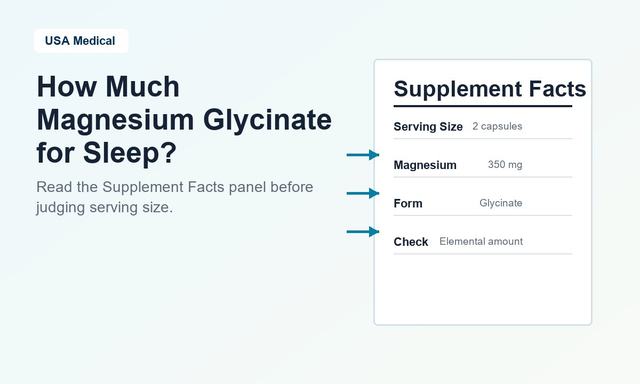
Check Elemental Magnesium
Elemental magnesium is the actual magnesium amount in the serving.
A label may say magnesium glycinate, magnesium bisglycinate, or chelated magnesium glycinate, but the key number is the magnesium amount per serving. This is usually listed in the Supplement Facts panel.
Check:
- Serving size
- Magnesium per serving
- Form of magnesium
- Suggested use
- Other magnesium products
- Warnings
Do not rely only on the front of the bottle.
Elemental magnesium is the dosage number that matters most.
Start Low if You Are New
If you are new to magnesium glycinate, it is often smart to start low.
Some people tolerate magnesium easily. Others get loose stool or stomach discomfort if they take too much too quickly. Starting with a lower serving gives your body time to respond.
A simple approach:
- Start with the label's suggested use or the lowest practical serving.
- Use it consistently for a week.
- Watch digestion and sleep routine.
- Increase only if the label allows and you tolerate it.
- Scale back if side effects appear.
Starting low helps you find a magnesium glycinate routine you can actually tolerate.
More Is Not Always Better
Taking more magnesium glycinate does not guarantee better sleep.
Too much supplemental magnesium can cause loose stool, diarrhea, nausea, cramping, and other side effects. The goal is not to take the most magnesium possible. The goal is to take an amount that supports your routine without creating problems.
The best magnesium glycinate serving is the lowest effective amount you tolerate well.
Magnesium glycinate dosage for sleep should be label-based, gradual, and focused on tolerance.
Who Should Ask a Doctor Before Taking Magnesium Glycinate?
Some people should ask a healthcare professional before using magnesium glycinate for sleep.
People With Kidney Disease
Kidney health is one of the biggest magnesium safety factors.
Healthy kidneys help remove excess magnesium. If kidney function is reduced, magnesium can build up and become dangerous. People with kidney disease or reduced kidney function should not take magnesium glycinate without medical guidance.
Kidney disease is a clear reason to ask a doctor before taking magnesium glycinate.
People Taking Medications
Magnesium can interact with certain medications.
This may include some antibiotics, osteoporosis medications, diuretics, and magnesium-containing antacids or laxatives. Magnesium may also affect how certain medications are absorbed if taken too close together.
Ask a doctor or pharmacist if you take:
- Antibiotics
- Osteoporosis medications
- Diuretics
- Heart medications
- Blood pressure medications
- Proton pump inhibitors
- Antacids or laxatives
- Any medication with strict timing instructions
If you take prescription medication, ask a pharmacist about magnesium timing.
Pregnant or Breastfeeding Individuals
Pregnancy and breastfeeding change nutrient needs and safety considerations.
If you are pregnant or breastfeeding, ask a healthcare professional before adding magnesium glycinate, especially if you already take a prenatal vitamin or other mineral products.
Pregnant or breastfeeding individuals should get personalized guidance before taking magnesium glycinate.
People Taking Multiple Supplements
Magnesium may already be in other products.
Check multivitamins, electrolyte powders, greens powders, sleep blends, antacids, laxatives, and mineral complexes. Total supplemental magnesium matters more than any one product.
If you take multiple supplements, count your total magnesium before adding more.
Magnesium glycinate is common, but safety depends on health status, medication use, and total magnesium intake.
How to Build a Better Magnesium Glycinate Sleep Routine
Magnesium glycinate works best when paired with better sleep habits.
Use It as a Cue
A cue is something that tells your body what happens next.
Taking magnesium glycinate can become a cue for winding down. The more consistent the routine, the more useful that cue becomes.
A simple routine:
- Take magnesium glycinate with water.
- Turn down bright lights.
- Stop work for the night.
- Avoid scrolling in bed.
- Read, stretch, or journal.
- Go to bed at a consistent time.
Magnesium glycinate is most useful when it becomes part of a repeated sleep signal.
Fix the Sleep Basics Too
Magnesium glycinate should not be expected to cancel out poor sleep habits.
If you want better sleep, start with the basics:
- Keep a consistent bedtime.
- Wake up at a consistent time.
- Reduce late caffeine.
- Keep your room cool and dark.
- Limit screens before bed.
- Avoid using your bed as a work zone.
Magnesium glycinate can support this routine, but it should not replace it.
Magnesium glycinate works better when the rest of your night supports sleep too.
Try USA Magnesium Glycinate
If you want a gentle magnesium option for sleep routines, USA Magnesium Glycinate is designed for simple nightly use.
Use it according to the label, take it at a consistent time, and pay attention to how your body responds. If side effects appear, scale back or stop and ask a healthcare professional when needed.
Shop USA Magnesium Glycinate
USA Magnesium Glycinate can fit into a calm, label-based nighttime routine.
A good sleep routine combines magnesium glycinate with consistency, environment, and better sleep habits.
Conclusion: Magnesium Glycinate May Be Good for Sleep Routines
Magnesium glycinate may be good for sleep because it supports normal muscle and nerve function, is often gentle on digestion, and fits well into a calm nighttime routine. But it should not be described as something that "makes you sleep." The research on magnesium and sleep is mixed, and not all studies are specific to magnesium glycinate. The most realistic expectation is that magnesium glycinate may support relaxation, muscle comfort, and sleep consistency for some people, especially when magnesium intake is low or the bedtime routine needs structure. Start with the label, take it consistently, scale back if digestive side effects appear, and ask a healthcare professional if you have kidney disease, take medications, are pregnant or breastfeeding, or use multiple magnesium products.

Comments
Comments are coming soon. For now, send product questions to our support team and we will help you decide whether magnesium glycinate makes sense for your routine.