
Is Magnesium Glycinate Safe?
Magnesium glycinate is generally well tolerated by many people, but safety depends on dose, health status, medication use, and total magnesium intake.
Magnesium Glycinate Is Usually Considered Gentle
Magnesium glycinate is commonly described as one of the gentler magnesium forms.
That is one reason people often choose it for sleep, relaxation, and nighttime routines. Compared with magnesium citrate or magnesium oxide, magnesium glycinate is less commonly chosen for bowel effects and may be easier for some people to tolerate.
However, "gentle" does not mean "impossible to overdo." Any magnesium supplement can cause side effects if the serving is too high, if you combine multiple magnesium products, or if your body has trouble removing excess magnesium.
Magnesium glycinate may be gentle, but it still needs to be used thoughtfully.
Safety Depends on Elemental Magnesium
The most important dosage number is elemental magnesium.
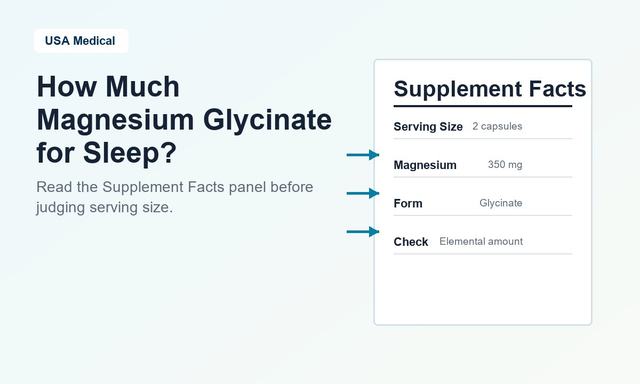
Magnesium glycinate is a compound made from magnesium and glycine. The label may mention the compound amount, but the "Magnesium" amount in the Supplement Facts panel is the number that usually tells you how much actual magnesium you are getting per serving.
Before taking magnesium glycinate, check:
- Serving size
- Magnesium per serving
- Suggested use
- Other magnesium-containing ingredients
- Warnings
- Servings per container
This matters because two magnesium glycinate products may have very different serving sizes.
To use magnesium glycinate safely, start by checking the elemental magnesium amount on the label.
Food Magnesium Is Different From Supplemental Magnesium
Magnesium from food and magnesium from supplements are not treated the same way for safety limits.
Magnesium naturally found in food is usually not a concern for healthy people because the kidneys can remove excess magnesium through urine. Supplemental magnesium is different. High intakes from supplements, antacids, laxatives, or medications are more likely to cause side effects.
This is why people should not assume that taking more magnesium glycinate is always better. The goal is to support healthy magnesium intake, not push the highest possible serving.
Supplemental magnesium needs more caution than magnesium from food.
Magnesium glycinate is often safe for healthy adults when used appropriately, but the label, serving size, and total supplemental magnesium intake matter.
Common Magnesium Glycinate Side Effects
The most common side effects are digestive, especially when the serving is too high.
Loose Stool or Diarrhea
Loose stool or diarrhea is one of the most common magnesium supplement side effects.
Magnesium can draw water into the intestines, especially when the body does not absorb all of it. Magnesium glycinate is usually less associated with this effect than citrate or oxide, but it can still happen.
You may be more likely to notice loose stool if:
- You take more than the suggested serving.
- You combine magnesium glycinate with citrate or oxide.
- You also use magnesium-containing antacids or laxatives.
- You have a sensitive stomach.
- You take it on an empty stomach.
- You are new to magnesium supplements.
If this happens, review your serving size and total magnesium intake.
Magnesium glycinate is usually gentle, but diarrhea can still happen if your total supplemental magnesium is too high.
Nausea or Stomach Discomfort
Some people feel nausea, stomach irritation, or discomfort after taking magnesium glycinate.
This may happen when the supplement is taken on an empty stomach, taken too close to bedtime, or taken in a larger serving than your body tolerates. Even a high-quality supplement can feel wrong if the timing or serving is wrong.
Simple ways to reduce discomfort may include:
- Taking it with food if the label allows.
- Taking it earlier in the evening.
- Starting with a lower serving if the label allows.
- Avoiding multiple magnesium products at once.
- Drinking enough water.
- Asking a healthcare professional if symptoms continue.
Stomach discomfort is a sign to review timing, serving size, and total magnesium intake.
Cramping or Abdominal Discomfort
Abdominal cramping can happen with too much supplemental magnesium.
This is usually part of the same digestive pattern as loose stool or diarrhea. If the supplement is pulling too much water into the intestines or moving digestion along too strongly, cramping may show up.
This side effect may be more common when people assume that more magnesium means better results. For sleep or relaxation, more is not always better. A higher serving may simply increase the chance of stomach problems.
If magnesium glycinate causes cramping, the serving may be too high or the routine may need adjustment.
Feeling Off or Unusual
Most side effects are digestive, but any unusual reaction should be taken seriously.
If you feel unusually weak, dizzy, flushed, lightheaded, short of breath, or like your heartbeat is irregular, stop taking the supplement and seek medical guidance. These are not typical everyday side effects and should not be ignored.
Unusual symptoms should be treated as a reason to stop and ask for help, not as something to push through.
The most common magnesium glycinate side effects are digestive, but unusual or serious symptoms deserve medical attention.
Can You Take Too Much Magnesium Glycinate?
Yes, it is possible to take too much magnesium from supplements.
Why Too Much Magnesium Can Be a Problem
Magnesium is essential, but excess supplemental magnesium can cause problems.
At moderate excess levels, the most common issue is digestive discomfort. At very high levels, especially in people whose kidneys cannot remove magnesium properly, magnesium can build up in the body and become dangerous.
This is why magnesium supplement safety depends on more than one bottle. You need to consider all magnesium sources from supplements and medications.
Possible magnesium sources include:
- Magnesium glycinate
- Magnesium citrate
- Magnesium oxide
- Multivitamins
- Electrolyte powders
- Sleep blends
- Antacids
- Laxatives
- Mineral complexes
Too much magnesium is usually a total-intake problem, not just a single-product problem.
The Supplemental Magnesium Upper Limit
For adults, the commonly listed upper limit for magnesium from supplements and medications is 350 mg per day unless a healthcare professional recommends otherwise.
This does not include magnesium naturally found in food. It refers to supplemental magnesium and magnesium-containing medications.
This is an important distinction. Someone may see that adult magnesium needs are a few hundred milligrams per day and assume they should get all of that from a supplement. That is not the same thing. Food magnesium counts toward daily intake, while the upper limit is specifically about supplemental sources.
The adult upper limit applies to supplemental magnesium, not magnesium naturally found in food.
Signs You May Be Taking Too Much
Possible signs of too much supplemental magnesium include:
- Diarrhea
- Loose stool
- Nausea
- Stomach cramping
- Vomiting
- Weakness
- Dizziness
- Low blood pressure symptoms
- Irregular heartbeat
- Difficulty breathing in severe cases
Mild digestive symptoms may mean the serving is too high. Severe symptoms require urgent medical attention.
Digestive symptoms are common warning signs, while weakness, breathing problems, or heartbeat changes are more serious.
Do Not Use Magnesium Glycinate to "Chase" Sleep
One common mistake is taking more magnesium glycinate because you want a stronger sleep effect.
Magnesium glycinate is not a sleeping pill. More does not guarantee deeper sleep, faster sleep, or better relaxation. It may only increase the risk of side effects.
For sleep, the better approach is:
- Take the suggested serving.
- Take it consistently.
- Reduce late caffeine.
- Dim lights at night.
- Reduce screens before bed.
- Keep a steady bedtime.
If magnesium glycinate is part of your sleep routine, use it consistently rather than aggressively.
You can take too much magnesium glycinate, especially when you combine multiple magnesium sources or exceed label directions.
Who Should Ask a Doctor Before Taking Magnesium Glycinate?
Some people should get personalized guidance before starting magnesium glycinate.
People With Kidney Disease
People with kidney disease should ask a doctor before taking magnesium glycinate.
Healthy kidneys help remove excess magnesium. When kidney function is reduced, magnesium can build up more easily. That can increase the risk of serious side effects.
This is one of the most important magnesium warnings. Even if magnesium glycinate is gentle for many healthy adults, kidney disease changes the safety calculation.
If you have kidney disease or reduced kidney function, do not start magnesium glycinate without medical guidance.
People Taking Prescription Medications
Magnesium can interact with certain medications or affect how they are absorbed.
You should ask a doctor or pharmacist before taking magnesium glycinate if you take:
- Tetracycline antibiotics
- Quinolone antibiotics
- Osteoporosis medications such as oral bisphosphonates
- Diuretics
- Proton pump inhibitors
- Heart medications
- Blood pressure medications
- Any medication with strict timing instructions
Magnesium may need to be separated from certain medications by several hours. A pharmacist can help with timing.
If you take prescription medication, ask about magnesium timing before adding it to your routine.
Pregnant or Breastfeeding Individuals
Pregnancy and breastfeeding change nutrient needs and safety considerations.
Magnesium is an essential mineral, but supplementation during pregnancy or breastfeeding should be discussed with a healthcare professional. This is especially important if you already take a prenatal vitamin, because many prenatal products contain minerals.
Before taking magnesium glycinate while pregnant or breastfeeding, check:
- Your prenatal vitamin label
- Your total magnesium intake
- Your doctor's advice
- Medication interactions
- Any pregnancy-specific health concerns
Pregnant or breastfeeding individuals should ask a healthcare professional before adding magnesium glycinate.
People Taking Multiple Supplements
People who take several supplements should be careful with overlap.
Magnesium may already be in a multivitamin, electrolyte powder, greens powder, mineral complex, or sleep supplement. If you add magnesium glycinate without checking labels, you may accidentally take more magnesium than intended.
A simple label check:
- Look for "Magnesium" in each Supplement Facts panel.
- Write down the magnesium amount per serving.
- Add the totals.
- Compare your total supplemental intake.
- Ask a professional if the total is unclear or high.
If you take multiple supplements, count total magnesium before adding magnesium glycinate.
People With Chronic Digestive Issues
If you have chronic diarrhea, IBS, inflammatory bowel disease, malabsorption, or ongoing stomach problems, ask before taking magnesium.
Magnesium supplements can affect digestion. Even gentle forms may bother certain people, especially at higher servings. If your digestive system is already sensitive, it is better to get guidance before adding a new mineral supplement.
Chronic digestive issues are a reason to be more cautious with magnesium supplements.
Anyone with kidney disease, medications, pregnancy, multiple supplements, or chronic digestive issues should ask a doctor or pharmacist first.
Magnesium Glycinate Medication Interactions
Magnesium can affect certain medications, and certain medications can affect magnesium levels.
Antibiotics
Magnesium can interfere with the absorption of some antibiotics.
This includes tetracycline and quinolone antibiotics. When magnesium binds with these medications in the digestive tract, the medication may not be absorbed properly. That can make the antibiotic less effective.
If you are taking an antibiotic, ask your pharmacist how far apart to separate magnesium glycinate from the antibiotic.
Do not take magnesium glycinate close to certain antibiotics unless a healthcare professional says the timing is safe.
Osteoporosis Medications
Magnesium can interfere with oral bisphosphonate medications used for osteoporosis.
These medications often have very specific timing instructions. Taking magnesium too close to them can reduce absorption. If you take osteoporosis medication, ask a pharmacist before using magnesium glycinate.
Oral osteoporosis medications and magnesium may need to be separated carefully.
Diuretics
Some diuretics can affect magnesium levels.
Loop and thiazide diuretics can increase magnesium loss in urine, while potassium-sparing diuretics can reduce magnesium excretion. This means magnesium status may shift depending on the type of diuretic.
If you take a diuretic, do not guess. Ask your healthcare professional whether magnesium supplementation makes sense.
Diuretics can change magnesium balance, so medical guidance matters.
Proton Pump Inhibitors
Long-term proton pump inhibitor use may be associated with low magnesium levels.
This includes medications used for acid reflux. Some people on long-term PPIs may need magnesium monitoring or guidance from a healthcare professional. Adding magnesium glycinate without checking may not be enough, and in some cases the issue needs medical management.
Long-term acid reflux medication use is a reason to discuss magnesium with a healthcare professional.
Antacids and Laxatives
Some antacids and laxatives contain magnesium.
This is easy to overlook. A person may take magnesium glycinate at night and also use a magnesium-containing antacid or laxative, raising total intake.
Check labels for:
- Magnesium hydroxide
- Magnesium oxide
- Magnesium citrate
- Magnesium carbonate
- Magnesium trisilicate
- Milk of magnesia
Magnesium-containing antacids and laxatives can add significantly to your total magnesium intake.
Medication interactions are one of the clearest reasons to ask a doctor or pharmacist before using magnesium glycinate daily.
How to Reduce Magnesium Glycinate Side Effects
Most mild side effects can be reduced by improving dosage, timing, and label awareness.
Start With the Label
The label should guide your routine.
Check the Supplement Facts panel for:
- Serving size
- Magnesium per serving
- Suggested use
- Other ingredients
- Warnings
- Servings per container
Do not take more than the suggested use unless a healthcare professional tells you to. Do not assume that a higher serving is better for sleep, stress, or muscle relaxation.
The safest magnesium routine starts with the Supplement Facts panel.
Take It With Food if Needed
Some people tolerate magnesium glycinate better with food.
If your stomach feels uncomfortable when taking it on an empty stomach, try taking it with dinner, breakfast, or a small snack if the label allows. For people using magnesium glycinate at night, taking it after dinner may be easier than taking it right before bed.
Taking magnesium glycinate with food may reduce stomach discomfort for some people.
Use One Magnesium Product at a Time
Avoid stacking magnesium products unless you know your total intake.
If you already take a magnesium supplement, do not add another form without checking the labels. This includes magnesium sleep blends, electrolyte powders, and digestive products.
A simple approach:
- Choose one main magnesium product.
- Check the elemental magnesium amount.
- Avoid duplicate magnesium unless directed.
- Reassess if side effects appear.
Using one magnesium product at a time makes side effects easier to understand.
Change Timing if Nighttime Use Feels Wrong
Magnesium glycinate is often taken at night, but night is not required.
If taking it before bed bothers your stomach, try taking it earlier in the evening or with breakfast if that fits the label. The best time is the time you can tolerate and repeat.
If nighttime magnesium causes discomfort, timing may be the problem rather than the supplement itself.
Stop and Ask if Symptoms Continue
Do not keep taking magnesium glycinate if it consistently makes you feel worse.
Stop and ask a healthcare professional if you experience ongoing diarrhea, nausea, stomach pain, weakness, dizziness, heartbeat changes, or any symptom that concerns you.
Side effects should lead to adjustment, not stubbornly continuing the same routine.
The best way to reduce side effects is to follow the label, avoid stacking magnesium, and listen to your body.
When to Stop Taking Magnesium Glycinate
Sometimes stopping is the right decision.
Stop for Severe Digestive Symptoms
If magnesium glycinate causes severe diarrhea, vomiting, or ongoing stomach pain, stop taking it and seek guidance.
Occasional mild stomach changes may improve with timing or serving adjustments, but severe symptoms should not be ignored. Dehydration can become a concern if diarrhea or vomiting is significant.
Severe digestive symptoms are a reason to stop and reassess.
Stop for Signs of Possible Magnesium Toxicity
Possible serious warning signs include:
- Extreme weakness
- Trouble breathing
- Irregular heartbeat
- Very low blood pressure symptoms
- Severe dizziness
- Confusion
- Persistent vomiting
- Fainting
These symptoms require urgent medical attention, especially if you have kidney disease or have taken high amounts of magnesium.
Serious symptoms after taking magnesium should be treated as urgent.
Stop Before Surgery or Procedures if Advised
If you are having surgery or a medical procedure, tell your healthcare team about all supplements.
Some providers may ask you to stop certain supplements before surgery. Magnesium may also matter if you are taking medications or have a condition affecting electrolytes.
Always disclose magnesium glycinate before surgery or procedures.
Stop if a Doctor Tells You To
If your healthcare professional advises stopping magnesium, follow that guidance.
This may happen if your magnesium levels are high, your kidney function changes, medication timing becomes complicated, or your symptoms suggest the supplement is not right for you.
Personalized medical advice should override general supplement guidance.
Stop magnesium glycinate if side effects are severe, symptoms are unusual, or your healthcare team recommends stopping.
How to Use Magnesium Glycinate Safely
A safe magnesium routine is simple, label-based, and consistent.
Read the Label First
Before taking magnesium glycinate, read the Supplement Facts panel and suggested use.
This tells you the serving size, elemental magnesium, form of magnesium, directions, and warnings. Do not rely only on front-label claims like "sleep," "calm," or "high potency."
The Supplement Facts panel is the most important part of the bottle for safety.
Keep a Supplement List
Write down every supplement you take.
Include vitamins, minerals, powders, gummies, herbs, sleep blends, antacids, and laxatives. This list is useful for you, your doctor, and your pharmacist.
Your list should include:
- Product name
- Serving size
- Magnesium amount
- Time of day
- Reason for taking it
- Any side effects
A supplement list helps prevent overlap and makes medical conversations easier.
Choose a Consistent Time
Magnesium glycinate is easiest to use safely when your routine is consistent.
Many people take it at night for sleep or relaxation. Others take it in the morning with breakfast. Either can work if it follows the label and does not conflict with medications.
A consistent routine makes it easier to notice whether magnesium glycinate helps or causes side effects.
Use USA Magnesium Glycinate Responsibly
If you choose USA Magnesium Glycinate, use it as part of a responsible wellness routine.
Follow the suggested use on the label, avoid combining it with multiple magnesium products unless you have guidance, and pay attention to how your body responds. Magnesium glycinate is meant to support your routine, not replace sleep hygiene, a balanced diet, or medical care.
The best magnesium routine is calm, consistent, and safety-aware.
Safe magnesium glycinate use comes down to reading the label, counting total magnesium, and asking for help when needed.
Conclusion: Magnesium Glycinate Is Gentle, But Still Deserves Caution
Magnesium glycinate is often a gentle, sleep-friendly magnesium form, but it can still cause side effects. The most common issues are digestive, including loose stool, diarrhea, nausea, stomach discomfort, and cramping, especially when the serving is too high or when multiple magnesium products are combined. People with kidney disease, people taking prescription medications, pregnant or breastfeeding individuals, and anyone already using magnesium-containing antacids, laxatives, or supplements should ask a doctor or pharmacist before starting. Used responsibly, magnesium glycinate can fit well into a daily or nighttime routine, but the safest approach is always label-first, dose-aware, and personalized to your health situation.
Comments
Comments are coming soon. For now, send product questions to our support team and we will help you decide whether magnesium glycinate makes sense for your routine.