
What Is Magnesium Glycinate?
Magnesium glycinate is a form of magnesium bound to glycine.
Magnesium Glycinate Definition
Magnesium glycinate is a dietary supplement that combines magnesium with the amino acid glycine.
Magnesium is an essential mineral involved in many important processes in the body, including muscle function, nerve function, energy production, blood pressure regulation, blood sugar regulation, and bone health. Glycine is an amino acid found naturally in protein containing foods. When magnesium is bound to glycine, the result is magnesium glycinate, sometimes called magnesium bisglycinate.
This form is popular because many people find it easier on the stomach than some other forms of magnesium. That matters for sleep because a nighttime supplement should not create digestive discomfort right before bed.
Magnesium glycinate is a gentle, common form of magnesium that many people choose for evening use.
Why People Use Magnesium Glycinate at Night
People usually take magnesium glycinate at night because they want help winding down.
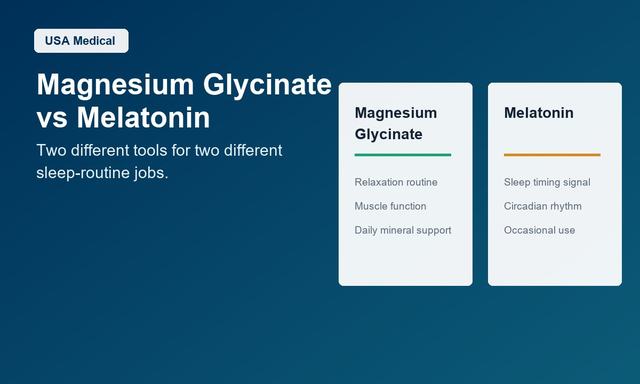
Magnesium plays a role in normal muscle and nerve function. It also supports the balance of signals in the nervous system. Because of this, many people use magnesium as part of a relaxation routine, especially when stress, muscle tension, or a busy mind makes it harder to settle down.
The key phrase is "part of a routine." Magnesium glycinate works best when it is not expected to do everything by itself. It should support a nighttime system that may also include dim lights, less screen time, a consistent bedtime, and a calmer environment.
Magnesium glycinate is often used at night because it fits naturally into a relaxation focused bedtime routine.
Is Magnesium Glycinate the Same as Other Magnesium?
No. Different forms of magnesium can feel different in practice.
Common forms include:
- Magnesium glycinate
- Magnesium citrate
- Magnesium oxide
- Magnesium malate
- Magnesium threonate
- Magnesium chloride
Each form combines magnesium with a different compound. Some forms are commonly used for general magnesium support. Some may be more likely to affect digestion. Some are marketed for specific goals like relaxation, bowel regularity, muscle support, or cognition.
Magnesium glycinate is often chosen for sleep because it is generally considered gentle and is paired with glycine. That does not mean it is the only useful form, but it does explain why it is commonly recommended for nighttime routines.
Magnesium glycinate is different from other magnesium forms because it is bound to glycine and is often preferred for calm, evening use.
Magnesium glycinate is a simple supplement form, but understanding what it is helps you use it more intelligently.
Does Magnesium Glycinate Help With Sleep?
Magnesium glycinate may help some people sleep better, but the evidence is not strong enough to call it a guaranteed sleep solution.
What the Research Suggests
Magnesium is often promoted for sleep, but the research is still developing.
Some studies on magnesium supplementation suggest possible improvements in sleep quality or sleep onset, especially in older adults or people who may have low magnesium intake. However, the overall evidence is limited, and many studies are small. Some research looks at magnesium generally, not magnesium glycinate specifically.
This matters because a lot of online content makes magnesium sound like a direct sedative. That is not the right way to think about it. Magnesium may help support normal relaxation pathways and a healthier nighttime routine, but it should not be treated like a drug that forces sleep.
Magnesium may support sleep for some people, but the evidence is mixed and should be understood realistically.
Why Magnesium Glycinate Is Popular for Sleep
Magnesium glycinate is popular for sleep because it checks three practical boxes.
First, it provides magnesium, an essential mineral involved in nerve and muscle function.
Second, it is bound to glycine, which gives it a calm, nighttime-friendly reputation.
Third, it is often gentler on digestion than some other magnesium forms, which makes it easier to take before bed.
For many people, the best magnesium for sleep is not the strongest or most aggressive option. It is the one they can take consistently without stomach upset. That is one reason magnesium glycinate is so commonly chosen.
Magnesium glycinate is popular for sleep because it is gentle, simple, and easy to include in a bedtime routine.
Who Might Benefit Most?
Magnesium glycinate may be most useful for people who struggle with consistency, low magnesium intake, muscle tension, or difficulty winding down.
It may be worth considering if:
- You do not get many magnesium rich foods.
- You often feel physically tense at night.
- You want a non-habit forming supplement for your bedtime routine.
- Other magnesium forms bother your stomach.
- You want to support relaxation without feeling groggy.
- You are building a more consistent evening routine.
It may be less useful if your sleep problems come from caffeine, inconsistent sleep timing, late screen use, alcohol, stress, sleep apnea, pain, or another medical issue. In those cases, magnesium may not address the root problem.
Magnesium glycinate may help most when it supports an already improving sleep routine.
Magnesium glycinate can be a useful nighttime supplement, but it works best when expectations are realistic.
Why Magnesium Glycinate Is Often Called the Best Magnesium for Sleep
Magnesium glycinate is often considered one of the best magnesium forms for sleep because it is gentle and bedtime friendly.
It Is Usually Gentle on the Stomach
A sleep supplement should not make your stomach uncomfortable.
Some forms of magnesium are more likely to loosen stool or cause digestive discomfort, especially at higher doses. That can be useful in certain situations, but it is not ideal when your goal is sleep. If you take a supplement before bed and it upsets your stomach, it may hurt your sleep instead of helping it.
Magnesium glycinate is often chosen because many people tolerate it well. This makes it a practical option for people who want magnesium support without a strong laxative effect.
Magnesium glycinate is a popular nighttime choice because it is generally considered easier on digestion.
It Pairs Magnesium With Glycine
The glycine part is one reason people associate magnesium glycinate with calm.
Glycine is an amino acid involved in several normal body processes. It is also often discussed in relation to relaxation and sleep quality. Magnesium glycinate combines magnesium with glycine, which gives the form a strong reputation for nighttime use.
This does not mean magnesium glycinate will automatically make you sleepy. It means the form is well suited for people looking for a calmer supplement option to include before bed.
The glycine component makes magnesium glycinate especially appealing for evening routines.
It Fits a Bedtime Habit
The best sleep supplement is one you can use consistently.
Magnesium glycinate is easy to pair with a simple nighttime sequence:
- Finish dinner.
- Dim lights.
- Reduce screens.
- Take magnesium glycinate with water.
- Read or wind down.
- Go to bed at a consistent time.
This matters because sleep quality is often shaped by repeated cues. Your body learns the pattern. Magnesium glycinate can become one piece of that pattern.
Magnesium glycinate works best when it becomes part of a consistent bedtime signal.
Magnesium glycinate earns its sleep-friendly reputation because it is gentle, calming, and easy to use consistently.
Magnesium Glycinate vs Other Magnesium Forms for Sleep
Different magnesium forms may be better for different goals.
Magnesium Glycinate vs Magnesium Citrate
Magnesium citrate is another common form of magnesium.
It is often considered well absorbed, but it can also have a stronger effect on bowel movements for some people. That may be helpful if someone also wants occasional constipation support, but it may not be ideal right before bed.
Magnesium glycinate is usually the better fit when the goal is a calm, gentle evening routine without a strong digestive effect.
Magnesium glycinate is often preferred over citrate for sleep when digestive gentleness is the priority.
Magnesium Glycinate vs Magnesium Oxide
Magnesium oxide is common and inexpensive, but it is not usually the first choice for sleep support.
It is often used in products related to digestion or occasional constipation. Some people tolerate it fine, but others may find it less comfortable or less sleep focused.
For someone searching "what is the best magnesium for sleep," magnesium glycinate is usually a more relevant answer than magnesium oxide.
Magnesium glycinate is usually a more sleep-focused option than magnesium oxide.
Magnesium Glycinate vs Magnesium Threonate
Magnesium threonate is often marketed for brain health and cognitive support.
Some people use it at night, but it is usually discussed differently from magnesium glycinate. Magnesium glycinate is more commonly positioned for relaxation, calm, and general magnesium support. Magnesium threonate is often more expensive and is usually chosen by people interested in cognitive support.
For a simple nighttime magnesium routine, magnesium glycinate is often the more practical choice.
Magnesium threonate may be interesting for cognitive goals, but magnesium glycinate is usually simpler for sleep routines.
Simple Comparison Table
| Magnesium Form | Common Reason People Use It | Sleep Routine Fit | Main Watchout |
|---|---|---|---|
| Magnesium Glycinate | Relaxation, gentle magnesium support | Strong fit | Still needs proper serving size |
| Magnesium Citrate | Magnesium support, bowel regularity | Moderate fit | May loosen stool |
| Magnesium Oxide | Common, inexpensive, digestive products | Lower fit | More likely to bother digestion |
| Magnesium Threonate | Cognitive support, brain-focused marketing | Possible fit | Often more expensive |
For most people looking for magnesium for sleep, magnesium glycinate is one of the most practical forms to consider first.
When to Take Magnesium Glycinate for Sleep
Most people take magnesium glycinate in the evening, often 30 to 60 minutes before bed.
Take It During Your Wind Down Routine
The best time to take magnesium glycinate is when your evening routine begins.
Do not wait until you are already exhausted. If you take it too late, you may forget, or you may make the habit feel like one more task. Instead, connect it to an evening cue.
Good timing options include:
- After dinner
- After brushing your teeth
- When you dim the lights
- When you start reading
- 30 to 60 minutes before bed
The right timing depends on your label directions and your actual schedule. The most important thing is consistency.
Magnesium glycinate works best as part of the beginning of your wind down routine, not as a last second fix.
Take It With Water
Keep the routine simple.
Put your magnesium glycinate near your evening routine and take it with water. If the product label suggests taking it with food, follow the label. If you notice stomach discomfort, taking it earlier in the evening or with a small snack may be easier.
A simple magnesium glycinate routine:
- Set reminder.
- Take magnesium glycinate with water.
- Dim lights.
- Avoid screens.
- Go to bed at a consistent time.
Taking magnesium glycinate should feel easy, calm, and repeatable.
Use a Reminder if You Forget
Evening routines are easy to miss.
Set a reminder that tells you exactly what to do. A vague reminder like "magnesium" is okay, but a specific one is better.
Better reminders:
- Take magnesium glycinate after dinner.
- Take magnesium glycinate with water.
- Take magnesium before winding down.
- Start bedtime routine and take magnesium.
This helps turn the supplement into a habit instead of another thing you have to remember.
A specific reminder can make magnesium glycinate easier to take consistently.
The best time to take magnesium glycinate for sleep is the time you can repeat calmly every night.
How Much Magnesium Glycinate Should You Take for Sleep?
The right serving depends on the product label, your total magnesium intake, and your personal situation.
Look for Elemental Magnesium
Supplement labels can be confusing.
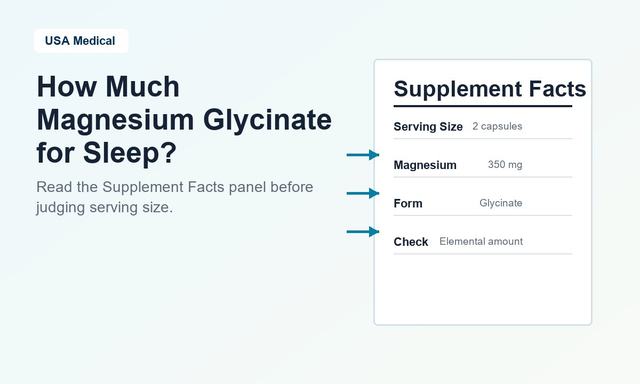
A magnesium glycinate product may list the total compound amount and the elemental magnesium amount. Elemental magnesium is the actual magnesium your body receives from the serving.
For example, a capsule may contain a larger amount of magnesium glycinate compound, but a smaller amount of elemental magnesium. When comparing products or serving sizes, look for the elemental magnesium amount.
Elemental magnesium is the number that matters most when checking the serving size.
Start With the Label
The safest starting point is the suggested use on your product label.
Do not assume more is better. Higher amounts of supplemental magnesium can cause diarrhea, nausea, cramping, or other side effects. Adults also have a daily upper limit for magnesium from supplements and medications, unless a healthcare professional recommends otherwise.
If you are new to magnesium glycinate, many people prefer starting with a lower serving and seeing how they feel. If you are taking medications, have kidney disease, are pregnant, or have a medical condition, ask a healthcare professional first.
Follow the label first, and avoid the mistake of thinking more magnesium means better sleep.
Be Careful Combining Magnesium Products
Magnesium can show up in more than one place.
You may be getting magnesium from:
- Magnesium glycinate
- A multivitamin
- Electrolyte powders
- Sleep blends
- Antacids
- Laxatives
- Other mineral supplements
This matters because your total supplemental magnesium can add up quickly. If you use multiple products, check each label.
Always count all supplemental magnesium sources, not just the bottle you take at night.
Magnesium glycinate serving size should be label based, cautious, and based on total supplemental magnesium intake.
Safety, Side Effects, and Who Should Be Careful
Magnesium glycinate is generally well tolerated, but it is still a supplement that should be used thoughtfully.
Possible Side Effects
Magnesium supplements can cause digestive side effects, especially at higher servings.
Possible side effects may include:
- Loose stool
- Diarrhea
- Nausea
- Stomach discomfort
- Cramping
Magnesium glycinate may be gentler than some other forms, but side effects are still possible. If a serving bothers your stomach, reduce the serving, take it earlier, take it with food if appropriate, or stop using it and ask a healthcare professional.
Magnesium glycinate is often gentle, but it can still cause side effects.
Medication Interactions
Magnesium supplements may interact with certain medications.
This can include some antibiotics, osteoporosis medications, diuretics, and medications that affect magnesium levels. Magnesium may also interfere with absorption of certain medications if taken too close together.
If you take prescription medication, ask your healthcare professional or pharmacist before starting magnesium glycinate.
Magnesium glycinate should be checked against your medication routine before daily use.
Kidney Disease and Magnesium
People with kidney disease should be especially careful with magnesium supplements.
Healthy kidneys help remove excess magnesium. If kidney function is impaired, too much magnesium can build up and become dangerous. This is one reason magnesium supplements should not be treated casually by people with kidney disease or serious medical conditions.
If you have kidney disease, do not start magnesium glycinate without medical guidance.
Sleep Problems That Need Medical Attention
Magnesium glycinate is not a substitute for medical care.
Talk to a healthcare professional if you have:
- Severe insomnia
- Loud snoring or possible sleep apnea
- Waking up gasping
- Restless legs symptoms
- Chronic fatigue despite enough sleep
- Chest pain, breathing problems, or irregular heartbeat
- Sleep problems that last for weeks or months
A supplement may support a routine, but it should not delay proper evaluation when symptoms are serious.
Magnesium glycinate can support a sleep routine, but it should not replace medical evaluation for persistent sleep problems.
Use magnesium glycinate thoughtfully, especially if you take medications or have health conditions.
How to Build a Better Night Routine With Magnesium Glycinate
Magnesium glycinate works best when combined with a simple sleep system.
Keep the Routine Consistent
Sleep responds well to rhythm.
Try to take magnesium glycinate around the same time each evening. Pair it with a routine that tells your body the day is ending. This could be brushing your teeth, dimming lights, reading, stretching, journaling, or preparing your room.
A good routine might be:
- Take magnesium glycinate.
- Turn down bright lights.
- Put your phone away.
- Read or relax.
- Keep the room cool and dark.
- Go to bed at a consistent time.
Magnesium glycinate works better when the rest of your bedtime routine supports sleep too.
Do Not Use It to Cancel Bad Sleep Habits
Magnesium cannot fully overcome a chaotic sleep routine.
If you drink caffeine late, scroll in bed, work until midnight, eat heavy meals right before sleep, or go to bed at a different time every night, magnesium glycinate may not do much. The supplement should support the routine, not replace it.
Improve the basics first:
- Keep a consistent bedtime.
- Reduce caffeine later in the day.
- Make the room dark and cool.
- Limit screens before bed.
- Build a calm wind down routine.
- Use magnesium glycinate consistently if it fits.
Magnesium glycinate is more useful when the rest of your sleep habits are moving in the right direction.
Give It Time
Do not judge magnesium glycinate from one night.
Some people notice a difference quickly. Others need more time. Some may not notice much at all. If you are using magnesium glycinate for sleep, try to evaluate the pattern over several weeks rather than one night.
Track simple markers:
- Time to fall asleep
- Nighttime awakenings
- Morning energy
- Muscle tension
- Digestive comfort
- Consistency taking it
Magnesium glycinate is best evaluated as part of a consistent sleep routine over time.
A better night routine gives magnesium glycinate the best chance to be useful.
Conclusion: Magnesium Glycinate Can Be a Helpful Part of a Sleep Routine
Magnesium glycinate is one of the most popular magnesium forms for sleep because it is gentle, easy to take at night, and paired with glycine. It may help some people support relaxation, muscle comfort, and a calmer bedtime routine, especially when magnesium intake is low. But it is not a guaranteed fix for insomnia, and it works best alongside good sleep habits. Start with the label, pay attention to elemental magnesium, avoid excessive servings, and talk to a healthcare professional if you take medications or have a medical condition. Used consistently and responsibly, magnesium glycinate can be a simple part of a healthier nighttime routine.
Comments
Comments are coming soon. For now, send product questions to our support team and we will help you decide whether magnesium glycinate makes sense for your routine.