
magnesium glycinate vs melatonin

Magnesium Glycinate vs Melatonin: Which Fits Your Sleep Routine?

Magnesium glycinate and melatonin are both popular sleep routine supplements, but they work in very different ways. Magnesium glycinate is a mineral supplement that may support relaxation, normal muscle and nerve function, and healthy magnesium intake. Melatonin is a hormone-related supplement that supports sleep-wake timing and circadian rhythm cues. One is not automatically better for everyone. The better choice depends on the problem you are trying to solve: a tense body and inconsistent nighttime routine, or a shifted sleep schedule and timing issue. This guide compares magnesium glycinate vs melatonin without attacking either option, so you can choose more intelligently.

Magnesium glycinate vs melatonin comparison for sleep routines.

Magnesium Glycinate vs Melatonin: The Simple Difference

Magnesium glycinate supports magnesium intake and relaxation routines, while melatonin supports sleep-wake timing.

Quick Answer

If your goal is a calm, gentle, nightly routine, magnesium glycinate is often the better fit.

If your issue is sleep timing, jet lag, shift work, or a delayed sleep schedule, melatonin may be more relevant when used appropriately.

Simple comparison:

Category Magnesium Glycinate Melatonin
What it is Mineral supplement Hormone-related supplement
Main role Supports magnesium intake, muscle and nerve function, relaxation routines Supports sleep-wake timing and circadian rhythm signaling
Best fit Nightly wind-down routine, muscle tension, relaxation support Jet lag, delayed sleep timing, circadian schedule issues
Sleep effect May support conditions that make sleep easier May help signal sleep timing
Habit-forming? Not considered a sedative sleep drug Not considered a sedative sleep drug, but routine dependence is possible for some users
Main caution Too much supplemental magnesium can cause digestive side effects Timing, next-day drowsiness, interactions, product label variability

Magnesium glycinate and melatonin are not the same kind of sleep supplement, so the right choice depends on your sleep problem.

Magnesium Is More About Relaxation Support

Magnesium glycinate does not tell your body what time it is.

Instead, it supports magnesium intake. Magnesium is involved in normal muscle function, nerve function, and many other body processes. The glycinate form is commonly chosen because it is gentle and fits well into nighttime routines.

People often choose magnesium glycinate when they want:

  • A calmer nighttime routine
  • Muscle relaxation support
  • General magnesium support
  • A supplement they can take consistently
  • A non-sedating option before bed
  • A gentle alternative to more digestion-focused magnesium forms

Magnesium glycinate is usually the better fit when the goal is relaxation and routine support.

Melatonin Is More About Sleep Timing

Melatonin is connected to the body's sleep-wake cycle.

Your body naturally produces melatonin in response to darkness. Melatonin supplements are often used when the timing of sleep is disrupted, such as jet lag or delayed sleep phase patterns.

People often consider melatonin when they want help with:

  • Jet lag
  • Shifted sleep timing
  • Delayed bedtime
  • Circadian rhythm support
  • Occasional schedule disruption
  • Travel-related sleep timing

Melatonin should not be treated like a general knockout supplement. It is more accurately understood as a timing signal.

Melatonin is usually more relevant when the main issue is sleep timing, not physical relaxation.

The simplest distinction is magnesium for mineral and relaxation support, melatonin for sleep-wake timing support.

What Is Magnesium Glycinate?

Magnesium glycinate is magnesium bound to glycine.

Magnesium Glycinate Definition

Magnesium glycinate is a dietary supplement that combines magnesium with glycine, an amino acid.

You may also see it called magnesium bisglycinate, chelated magnesium glycinate, or magnesium glycinate chelate. These terms generally refer to a glycine-bound magnesium form.

Magnesium glycinate is popular because many people find it gentle compared with magnesium citrate or magnesium oxide. That matters at night because a sleep routine supplement should not create stomach discomfort or send you to the bathroom.

Magnesium glycinate is a gentle magnesium form often chosen for sleep, relaxation, and nighttime routines.

What Magnesium Glycinate May Support

Magnesium glycinate may support the conditions that make sleep easier, but it does not force sleep.

It may support:

  • Normal muscle function
  • Normal nerve function
  • Relaxation routines
  • Nighttime muscle comfort
  • Healthy magnesium intake
  • A consistent bedtime habit

This is why magnesium glycinate is often considered one of the best magnesium forms for sleep routines. It is not because it works like a sedative. It is because it fits the bedtime routine well.

For a deeper guide, read: Magnesium Glycinate for Sleep

Magnesium glycinate is best understood as sleep routine support, not a sleep medication.

What Magnesium Glycinate Does Not Do

Magnesium glycinate does not directly reset your circadian rhythm the way melatonin may.

It also should not be expected to overcome late caffeine, alcohol, chronic stress, sleep apnea, pain, or irregular sleep schedules by itself. If your sleep problem is medical or persistent, a supplement is not enough.

Magnesium glycinate can support a better routine, but it does not replace sleep hygiene or medical care.

Magnesium glycinate is a strong option for people who want a gentle, mineral-based nighttime supplement.

What Is Melatonin?

Melatonin is a hormone naturally produced by the body that helps regulate sleep-wake timing.

Melatonin Definition

Melatonin is often called the "sleep hormone," but that phrase can be misleading.

Melatonin does not simply knock you out. It helps signal to the body that it is time for sleep. Darkness increases natural melatonin production, while bright light, especially at night, can interfere with that signal.

Melatonin supplements are commonly used for specific timing problems, especially when the body's clock is shifted.

Melatonin is mainly a sleep-wake timing signal, not a general relaxation mineral.

What Melatonin May Support

Melatonin may be useful when the issue is timing.

It may fit situations such as:

  • Jet lag
  • Delayed sleep timing
  • Shift work schedule changes
  • Trouble adjusting to a new sleep schedule
  • Occasional circadian rhythm disruption

This is why melatonin can be helpful for some people, but disappointing for others. If your sleep issue is physical tension, stress, poor sleep hygiene, or late caffeine, melatonin may not address the root cause.

Melatonin may fit best when the main problem is when your body thinks bedtime should happen.

What Melatonin Does Not Do

Melatonin is not the same as a sedative sleep medication.

It should not be used casually as a nightly solution for every sleep problem. It may cause next-day drowsiness, vivid dreams, headaches, dizziness, nausea, or other side effects in some people. It can also interact with medications.

Melatonin also has product quality concerns. Since it is sold as a dietary supplement in the United States, label accuracy can vary by product.

Melatonin can be useful, but it should be used with timing, dose, and safety awareness.

Melatonin is more specialized than many people realize, and it is usually best for sleep timing issues.

Magnesium or Melatonin for Sleep: Which Is Better?

The better choice depends on whether your sleep issue is relaxation or timing.

Choose Magnesium Glycinate If...

Magnesium glycinate may be the better fit if you want a gentle nightly routine.

Choose magnesium glycinate if:

  • Your body feels tense at night.
  • You want a non-sedating bedtime supplement.
  • You want mineral support.
  • You want a supplement for relaxation routines.
  • You prefer something gentle on digestion.
  • You are building a consistent wind-down routine.
  • You want a sleep support supplement that is not hormone-based.

Magnesium glycinate may be especially practical if you are looking for the best supplement for a sleep routine rather than a short-term timing reset.

Magnesium glycinate is usually the better fit for ongoing relaxation and bedtime routine support.

Choose Melatonin If...

Melatonin may be the better fit if your sleep schedule is shifted.

Choose melatonin if:

  • You are dealing with jet lag.
  • Your sleep timing is delayed.
  • Your schedule changed suddenly.
  • You need circadian timing support.
  • A healthcare professional recommends it.
  • You are using it short term and carefully.

Melatonin may make more sense when the question is not "how do I relax?" but "how do I shift my sleep timing?"

Melatonin is usually the better fit for sleep-wake timing problems.

What If You Have Both Problems?

Some people have both tension and timing problems.

For example, someone may travel across time zones and also feel physically tense at night. In that case, magnesium glycinate and melatonin may seem appealing together. But combining supplements should be done thoughtfully.

Before combining, ask:

  • Do I really need both?
  • Am I taking medications?
  • Do I know the dose of each?
  • Have I tried one at a time first?
  • Am I watching for side effects?
  • Is this a short-term or nightly plan?

If you are considering both, start carefully and ask a healthcare professional if you have any health concerns.

Magnesium glycinate is usually better for relaxation routines, while melatonin is usually better for circadian timing issues.

Magnesium Glycinate vs Melatonin for Nightly Use

Nightly use is where magnesium glycinate often fits more naturally.

Magnesium Glycinate as a Nightly Routine

Many healthy adults can take magnesium glycinate nightly if they follow the label and tolerate it well.

It can become part of a simple routine:

  • Take magnesium glycinate with water.
  • Dim lights.
  • Stop work.
  • Reduce screens.
  • Read, stretch, or journal.
  • Go to bed consistently.

This routine works because it is repeatable. The supplement is not doing everything. It is part of a larger signal that the day is ending.

Magnesium glycinate often fits nightly use because it supports routine, not forced sedation.

Melatonin as a Nightly Routine

Melatonin is often better used with a specific reason.

Some people use melatonin nightly, but it is usually worth asking why. If the issue is a short-term schedule shift, melatonin may be useful. If the issue is chronic insomnia, the answer may need more than a supplement.

Long-term melatonin use should be discussed with a healthcare professional, especially for children, pregnant or breastfeeding individuals, older adults, people with autoimmune disease, and people taking medications.

Melatonin may fit certain sleep timing needs, but nightly long-term use deserves more caution.

Non Habit Forming Sleep Supplement Considerations

People often search for a "non habit forming sleep supplement" because they want support without dependence.

Magnesium glycinate is not a sedative sleep drug. Melatonin is also not generally considered habit-forming in the same way many sedative sleep medications can be. However, people can still become psychologically reliant on a routine if they believe they cannot sleep without something.

A better mindset is:

Use supplements to support the sleep routine, not replace your own sleep ability.

A non-habit-forming sleep routine should still focus on habits, light, schedule, and environment.

Magnesium glycinate is often the more natural nightly routine supplement, while melatonin is more timing-specific.

How They Work Differently

Magnesium glycinate and melatonin support sleep through different pathways.

Magnesium Glycinate Supports Mineral Status

Magnesium is an essential mineral.

It is involved in hundreds of normal body processes, including muscle and nerve function. When people take magnesium glycinate before bed, they are usually trying to support calm, comfort, and magnesium intake.

This may be useful if:

  • Your diet is low in magnesium-rich foods.
  • You feel physically tense at night.
  • You train hard and want recovery support.
  • You want a gentle mineral routine.
  • You prefer not to use a hormone-related supplement.

Magnesium glycinate works through mineral support and routine consistency.

Melatonin Supports Circadian Signaling

Melatonin is about timing.

Your body naturally produces melatonin when it gets dark. Taking melatonin at the wrong time may not help, and in some cases may make sleep timing more confusing. That is why melatonin timing matters so much.

Melatonin may be more relevant when:

  • Your sleep schedule is shifted later.
  • You are traveling.
  • You are adjusting to a new time zone.
  • You need to move sleep timing earlier.
  • A clinician recommends it for a timing disorder.

Melatonin works best when timing is the problem and the supplement is timed appropriately.

Sleep Quality vs Sleep Timing

This is the central comparison.

Magnesium glycinate is usually more about sleep quality routines: relaxation, tension, muscle comfort, and habit consistency.

Melatonin is usually more about sleep timing: when the body starts receiving the signal that night has begun.

If your issue is that you feel tired but wired, magnesium glycinate may fit better. If your issue is that your body does not feel sleepy until 2 a.m., melatonin may be more relevant with professional guidance.

Magnesium supports the sleep routine; melatonin supports the sleep clock.

Magnesium glycinate and melatonin work differently enough that they should not be treated as interchangeable.

Safety and Side Effects

Both supplements can be useful, but both deserve label and health awareness.

Magnesium Glycinate Side Effects

Magnesium glycinate is usually gentle, but side effects can happen.

Possible side effects include:

  • Loose stool
  • Diarrhea
  • Nausea
  • Stomach discomfort
  • Cramping

These effects are more likely if the dose is too high, increased too quickly, or combined with other magnesium products.

Magnesium can also interact with certain medications, including some antibiotics and osteoporosis medications. People with kidney disease should be especially careful because kidneys help remove excess magnesium.

Magnesium glycinate is gentle for many people, but dosage and kidney health matter.

Melatonin Side Effects

Melatonin may also cause side effects.

Possible side effects include:

  • Daytime drowsiness
  • Headache
  • Dizziness
  • Nausea
  • Vivid dreams or nightmares
  • Mood changes in some people
  • Interaction concerns with medications

Melatonin may interact with blood thinners, seizure medications, blood pressure medications, diabetes medications, contraceptives, immunosuppressants, and other products. People with autoimmune disease, pregnancy, breastfeeding, dementia, or complex medical conditions should ask a healthcare professional before using melatonin.

Melatonin can be helpful, but it is not automatically harmless just because it is sold over the counter.

Label Accuracy Matters for Both

Both magnesium and melatonin are dietary supplements in the United States.

That means label quality matters. A product should clearly list serving size, amount per serving, active ingredients, other ingredients, suggested use, and warnings. Melatonin products in particular have had public concern around label accuracy and dosage variability.

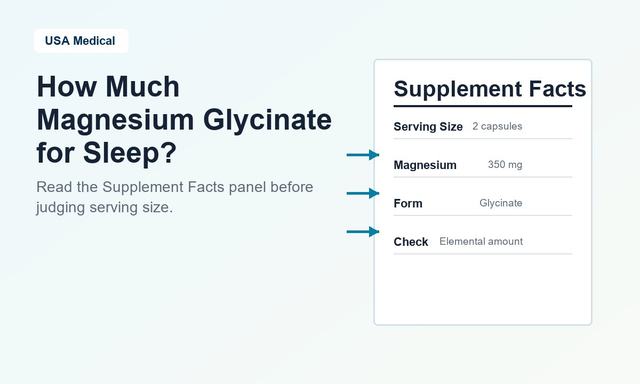
For magnesium glycinate, check elemental magnesium.

For melatonin, check the milligram amount and whether it is immediate-release or extended-release.

Supplement quality and label clarity matter for both magnesium glycinate and melatonin.

Both supplements can be used thoughtfully, but neither should be taken without reading the label and considering personal health context.

Can You Take Magnesium Glycinate and Melatonin Together?

Some products combine them, but combining is not always necessary.

Try One at a Time First

If you are deciding between magnesium glycinate vs melatonin, try to understand what each one does for you separately.

If you start both at once, you may not know what helped or what caused side effects. A better approach is to test one at a time, unless a healthcare professional tells you otherwise.

A simple approach:

  • Improve sleep basics first.
  • Try magnesium glycinate if your goal is relaxation routine support.
  • Try melatonin only if timing is the main issue.
  • Track sleep and side effects.
  • Avoid stacking unnecessary sleep supplements.

Testing one supplement at a time gives you clearer information.

When Combining Might Make Sense

Combining may make sense in specific situations, especially when both relaxation and timing are concerns.

For example, someone dealing with travel-related sleep disruption might use melatonin for timing and magnesium glycinate for a calming evening routine. But this should be short-term and thoughtful, not an automatic nightly habit.

Combining magnesium and melatonin may make sense sometimes, but it should not be the default first step.

When to Ask a Healthcare Professional

Ask a healthcare professional before combining if you:

  • Take prescription medications
  • Have kidney disease
  • Are pregnant or breastfeeding
  • Have autoimmune disease
  • Have seizures
  • Take blood thinners
  • Take blood pressure medications
  • Have chronic insomnia
  • Are giving supplements to a child
  • Use other sleep aids

Combining sleep supplements is a good reason to ask for professional guidance.

Magnesium glycinate and melatonin can be combined in some cases, but most people should start by choosing the one that matches their actual sleep issue.

Best Supplement for Sleep Routine: How to Choose

The best sleep supplement is the one that matches the job.

If You Want a Gentle Nightly Routine

Choose magnesium glycinate.

It fits if your goal is:

  • Relaxation support
  • Muscle comfort
  • Nighttime recovery
  • Mineral intake
  • A consistent wind-down routine
  • A non-sedating sleep support habit

For more detail, read: Magnesium Glycinate for Sleep

Magnesium glycinate is usually the better fit for a gentle nightly routine.

If You Want the Best Magnesium Form for Sleep

Choose magnesium glycinate over more digestion-focused forms.

Magnesium citrate and oxide can be useful, but they are usually not the first choice for sleep routines. Glycinate is typically preferred because it is gentle and less likely to create digestive disruption.

For a full form comparison, read: Best Magnesium for Sleep: Glycinate vs Citrate vs Oxide

For sleep-focused magnesium, glycinate is usually the most practical form.

If You Want Circadian Timing Support

Melatonin may be the better fit.

This is especially true for jet lag, delayed sleep timing, or schedule shifts. But timing, dose, and duration matter. Do not assume more melatonin is better. More may increase the chance of side effects without improving the routine.

Melatonin is usually best reserved for timing-related sleep needs.

If You Want a Product for Nightly Magnesium Support

USA Magnesium Glycinate is designed for people who want a simple magnesium glycinate option for nighttime routines.

Use it according to the label, take it consistently, and pay attention to how your body responds.

Shop USA Magnesium Glycinate

A quality magnesium glycinate supplement should make your sleep routine simpler, not more complicated.

Choose magnesium glycinate for routine support and melatonin for timing support.

Sleep Basics Matter More Than Either Supplement

No supplement should replace the foundation.

Start With the Sleep Environment

Before relying on supplements, improve the sleep setting.

Focus on:

  • Cool room
  • Dark room
  • Comfortable bedding
  • Lower evening light
  • Less noise
  • Consistent wake time

Supplements work best when your sleep environment supports sleep.

Fix Caffeine and Screens

Late caffeine and nighttime screens can overpower both magnesium and melatonin.

If you drink caffeine late in the day or scroll in bed, your sleep routine is fighting uphill. Melatonin timing signals and magnesium relaxation support may not be enough to overcome stimulation.

Caffeine and screens are often bigger sleep levers than supplements.

Know When Sleep Needs Medical Help

Talk to a healthcare professional if you have:

  • Chronic insomnia
  • Loud snoring
  • Waking up gasping
  • Severe daytime sleepiness
  • Restless legs symptoms
  • Chest pain or breathing issues
  • Sleep problems lasting weeks or months
  • Sleep problems affecting work, driving, or safety

Persistent sleep problems should be evaluated instead of covered with supplements.

Magnesium glycinate and melatonin can support sleep routines, but they do not replace good sleep hygiene or medical evaluation.

Conclusion: Magnesium Glycinate and Melatonin Fit Different Sleep Problems

Magnesium glycinate vs melatonin is not a contest where one supplement beats the other for every person. They do different jobs. Magnesium glycinate is a mineral-based option that may support relaxation, normal muscle and nerve function, magnesium intake, and a calm nighttime routine. Melatonin is a hormone-related supplement that may support sleep-wake timing, especially for jet lag, delayed sleep timing, or schedule shifts. If you want a gentle nightly routine, magnesium glycinate is usually the better fit. If your body clock is shifted, melatonin may make more sense when used thoughtfully. Either way, read labels, start carefully, avoid unnecessary stacking, and ask a healthcare professional if you take medications, have health conditions, are pregnant or breastfeeding, or have ongoing sleep problems.

FAQ

What is better, magnesium glycinate or melatonin?

It depends on your sleep issue. Magnesium glycinate is usually better for relaxation, muscle comfort, and a nightly wind-down routine. Melatonin is usually better for sleep-wake timing problems such as jet lag or delayed sleep timing.

Should I take magnesium or melatonin for sleep?

Choose magnesium glycinate if you want gentle routine support and mineral intake. Choose melatonin if your main issue is sleep timing. If you are unsure or have chronic sleep problems, ask a healthcare professional.

Is magnesium glycinate a sleep aid?

Magnesium glycinate may support sleep routines, but it is not a sedative or sleeping pill. It may help support relaxation, normal muscle function, and a calmer bedtime routine.

Is melatonin a sleep aid?

Melatonin can support sleep timing and circadian rhythm signaling. It may help in certain timing-related situations, but it should not be treated as a general solution for all sleep problems.

Can I take magnesium glycinate and melatonin together?

Some people combine them, but it is usually better to try one at a time first. Ask a healthcare professional before combining if you take medications, have health conditions, are pregnant or breastfeeding, or use other sleep aids.

Is magnesium glycinate non habit forming?

Magnesium glycinate is not considered a sedative sleep drug and is not generally associated with drug-like dependence. However, it should still be used as part of a healthy sleep routine rather than as a psychological crutch.

Is melatonin habit forming?

Melatonin is not generally considered habit-forming like many sedative sleep medications, but some people may become psychologically reliant on taking something every night. Long-term use should be discussed with a healthcare professional.

Is magnesium glycinate safer than melatonin?

Not automatically. Magnesium glycinate and melatonin have different safety concerns. Magnesium requires attention to supplemental magnesium intake, kidney health, and medication interactions. Melatonin requires attention to timing, dose, next-day drowsiness, interactions, and long-term use.

Which is better for jet lag, magnesium or melatonin?

Melatonin is usually more relevant for jet lag because jet lag is a sleep-wake timing issue. Magnesium glycinate may still support relaxation, but it does not directly reset circadian timing.

Which is better for muscle tension at night?

Magnesium glycinate is usually more relevant for nighttime muscle tension because magnesium supports normal muscle and nerve function. Persistent or severe muscle symptoms should be evaluated by a healthcare professional.

What is the best supplement for a sleep routine?

For a gentle nightly sleep routine, magnesium glycinate is often a strong option. For sleep timing problems, melatonin may fit better. The best routine still includes consistent bedtime, low light, less caffeine, and a good sleep environment.

Topics Covered

magnesium glycinate vs melatonin magnesium or melatonin for sleep melatonin vs magnesium best supplement for sleep routine non habit forming sleep supplement magnesium glycinate for sleep melatonin for sleep magnesium for sleep magnesium glycinate before bed magnesium glycinate at night melatonin sleep timing magnesium sleep routine best magnesium for sleep USA Magnesium Glycinate

About the Author

Jake Crossman

Managing Partner, USA Medical

Jake Crossman leads USA Medical's supplement education work. After more than five years in the vitamin business, his focus is helping people build simple routines they can actually follow.

Comments

Comments are coming soon. For now, send product questions to our support team and we will help you decide whether magnesium glycinate makes sense for your routine.