
Should You Take Magnesium Glycinate in the Morning or at Night?
Most people take magnesium glycinate at night for sleep and relaxation, but morning is also fine if it fits your routine better.
Quick Answer
Take magnesium glycinate at night if your main goal is sleep, relaxation, or a calmer evening routine.
Take magnesium glycinate in the morning if you are more likely to remember it with breakfast, if nighttime supplements bother your stomach, or if you are taking it mainly for general magnesium support rather than sleep.
A simple decision guide:
- For sleep support: take it at night.
- For relaxation before bed: take it in the evening.
- For general magnesium support: take it whenever you are most consistent.
- For stomach comfort: take it with food if the label allows or suggests it.
- For forgetfulness: take it with your strongest daily habit.
- For medication concerns: ask a healthcare professional or pharmacist.
The timing matters, but consistency matters more.
Magnesium glycinate works best when you take it at a time you can repeat consistently.
Why Nighttime Is the Most Popular Choice
Nighttime is the most popular time because magnesium glycinate is commonly used for sleep and relaxation.
Many people take magnesium glycinate as part of a wind-down routine. It fits naturally with habits like brushing your teeth, turning off screens, dimming lights, reading, stretching, or preparing for bed.
A simple night routine might look like this:
- Finish dinner.
- Take magnesium glycinate with water.
- Dim the lights.
- Reduce screen time.
- Read or stretch lightly.
- Go to bed at a consistent time.
This works because the supplement becomes one part of a larger bedtime signal. Your body and mind learn the routine.
Nighttime is often best when magnesium glycinate is part of a calming sleep routine.
Why Morning Can Still Work
Morning can work well if that is when you are most consistent.
Some people intend to take magnesium glycinate at night but always forget. They fall asleep, get distracted, go out, or ignore the reminder. In that case, morning may be better.
Morning magnesium glycinate may make sense if:
- You eat breakfast consistently.
- You take other supplements in the morning.
- You are building a simple daily routine.
- Your evenings are unpredictable.
- You want general magnesium support.
- You prefer taking supplements earlier in the day.
Magnesium glycinate does not have to be taken at night unless that timing matches your goal and routine.
Morning is a good choice if it helps you take magnesium glycinate consistently.
Night is usually best for sleep-focused routines, but morning is perfectly reasonable for general magnesium support and better consistency.
Taking Magnesium Glycinate at Night
Nighttime is usually the best choice if you are taking magnesium glycinate for sleep.
Why Magnesium Glycinate Fits a Bedtime Routine
Magnesium glycinate is one of the most popular magnesium forms for nighttime use because it is gentle and paired with glycine.
Magnesium supports normal muscle and nerve function, and glycine is an amino acid often associated with calm. This does not mean magnesium glycinate works like a sleeping pill. It does not force sleep. Instead, it may support a calmer routine, especially when paired with better sleep habits.
A bedtime routine gives the supplement context. Instead of taking magnesium randomly, you take it as part of the same pattern each night.
That pattern might include:
- Lower light
- Less phone use
- A cool bedroom
- Reading instead of scrolling
- Magnesium glycinate with water
- A consistent bedtime
Magnesium glycinate fits nighttime best when it supports a full wind-down routine.
How Long Before Bed Should You Take Magnesium Glycinate?
Many people take magnesium glycinate about 30 to 60 minutes before bed.
That window is practical because it gives you time to begin winding down. It also keeps the supplement connected to your evening routine instead of making it something you remember at the last second.
Good timing options include:
- After dinner
- After brushing your teeth
- When you dim the lights
- Before reading
- 30 to 60 minutes before bed
The exact time matters less than consistency. If taking it after dinner helps you remember, that may be better than waiting until right before sleep and forgetting.
For sleep routines, take magnesium glycinate early enough that it becomes part of winding down, not a rushed bedtime task.
Take It Earlier if Bedtime Is Too Late
Do not wait until you are already exhausted.
If you set your magnesium reminder for the moment you are getting into bed, you may skip it. You may also forget water, ignore the reminder, or decide not to get back up. For many people, the better time is earlier in the evening.
Better examples:
- After dinner instead of in bed
- After brushing teeth instead of after lights out
- Before screen-free time instead of after scrolling
- During evening tea or reading instead of when half asleep
The goal is to make the routine easy.
Nighttime magnesium works better when you take it before fatigue makes the routine harder.
Taking magnesium glycinate at night is usually best for sleep, but the timing should be early enough to repeat calmly.
Taking Magnesium Glycinate in the Morning
Morning can be the better choice if it helps you stay consistent.
Why Morning Magnesium Glycinate Can Work
Morning magnesium glycinate works because consistency is the real goal.
If breakfast is the most stable part of your day, use it. If you already take vitamins in the morning, adding magnesium glycinate to that routine may be easier than creating a new nighttime habit.
A morning magnesium routine might look like this:
- Make coffee or breakfast.
- Take magnesium glycinate with water.
- Take other daily supplements if appropriate.
- Mark the routine complete.
- Continue your day.
This is especially helpful for people who forget evening supplements. A supplement you take consistently in the morning is better than a supplement you intend to take at night but keep missing.
Morning magnesium glycinate is useful when morning is your strongest habit window.
Morning May Be Better for General Magnesium Support
If you are not taking magnesium glycinate specifically for sleep, timing becomes more flexible.
Some people take magnesium glycinate for general magnesium support, muscle function, nerve function, or because they do not get much magnesium from food. For these goals, morning can be perfectly practical.
The important questions are:
- Can you take it consistently?
- Does it feel good on your stomach?
- Does it follow the label directions?
- Does it fit your medication schedule?
- Are you counting other magnesium sources?
If the answer is yes, morning is fine.
For general magnesium support, the best time is the time you can take it every day.
Morning May Help if Nighttime Upsets Your Stomach
Magnesium glycinate is usually considered gentle, but side effects are still possible.
Some people prefer taking supplements earlier in the day because taking anything too close to bed feels uncomfortable. If magnesium glycinate causes stomach discomfort at night, morning with breakfast may be easier.
Possible signs morning may be better:
- You feel stomach discomfort at night.
- You wake up needing the bathroom.
- You forget water before bed.
- You dislike taking capsules late.
- You tolerate supplements better with breakfast.
If discomfort continues, review the serving size and ask a healthcare professional.
Morning can be better if taking magnesium glycinate at night does not feel comfortable.
Morning magnesium glycinate is a good option when consistency, comfort, or breakfast timing makes it easier.
Should You Take Magnesium Glycinate With Food?
You can often take magnesium glycinate with or without food, but the product label should decide.
Follow the Label First
Always start with the suggested use on your specific magnesium glycinate label.
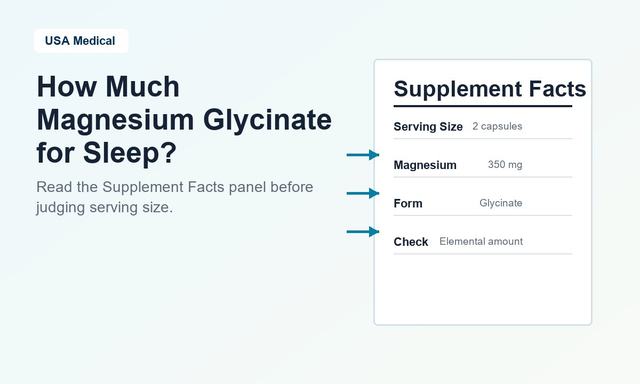
Some labels may suggest taking it with food. Others may simply say to take it with water. The label also tells you the serving size, magnesium amount, servings per container, and warnings.
Before taking magnesium glycinate, check:
- Serving size
- Magnesium per serving
- Suggested use
- Whether food is mentioned
- Warnings
- Other ingredients
Do not assume every magnesium glycinate product is the same.
The label should guide whether you take magnesium glycinate with food.
Food May Help With Stomach Comfort
Taking magnesium glycinate with food may be easier for some people.
Even gentle supplements can bother certain stomachs. If taking it on an empty stomach feels uncomfortable, try pairing it with a meal or snack, as long as that fits the label.
Good food-based timing options include:
- With breakfast
- With dinner
- After a small evening snack
- With your daily supplement routine
This can be especially helpful if you are new to magnesium or sensitive to supplements.
Taking magnesium glycinate with food can make the routine more comfortable for some people.
Do Not Mix It Randomly With Medication
Magnesium can interfere with certain medications.
This may include some antibiotics, osteoporosis medications, diuretics, and magnesium-containing antacids or laxatives. Magnesium can also affect absorption if taken too close to certain medicines.
If you take medications, ask your doctor or pharmacist how far apart to separate magnesium from your medication schedule.
Food timing is flexible, but medication timing should be checked carefully.
Magnesium glycinate can fit morning meals or evening routines, but the label and medication schedule should come first.
Should You Split Magnesium Glycinate Between Morning and Night?
Some people split magnesium glycinate, but it is not necessary for everyone.
When Splitting Might Make Sense
Splitting a serving means taking part in the morning and part at night.
This may make sense if the label allows it and you want a gentler approach. Some people prefer smaller servings because they are easier on the stomach. Others like having magnesium support spread across the day.
Splitting may be useful if:
- The label allows flexible serving.
- One full serving feels uncomfortable.
- You take magnesium for general support.
- You already have both morning and night routines.
- A healthcare professional suggests it.
Splitting can be helpful when it improves comfort and still keeps the routine simple.
When Splitting Is a Bad Idea
Splitting can make the routine harder.
If you already struggle to remember supplements, two reminder times may be too much. A simple routine you follow is better than a perfect routine you keep missing.
Splitting may not be ideal if:
- You forget supplements often.
- You dislike multiple reminders.
- You are taking magnesium for sleep only.
- You cannot track whether you took both servings.
- The label does not suggest flexible use.
Splitting is not worth it if it makes the habit too complicated.
How to Track Split Servings
If you split magnesium glycinate, track it clearly.
Use a pill organizer, supplement tracker, app reminder, or simple checklist. The key is knowing whether you took the morning serving, evening serving, both, or neither.
A split routine might look like:
- Morning: take first serving with breakfast.
- Evening: take second serving after dinner.
- Track both servings.
- Check total daily magnesium.
- Avoid stacking other magnesium products.
If you split servings, make the schedule clear enough that you do not accidentally double up.
Splitting magnesium glycinate can work, but most people should start with the simplest routine they can follow.
Best Time to Take Magnesium Glycinate for Sleep
For sleep, evening is usually the best time.
Use Magnesium Glycinate as a Sleep Cue
A sleep cue is something that tells your body the day is ending.
Magnesium glycinate can become one of those cues. When you take it at the same time each night, it becomes part of the pattern that leads toward sleep.
A strong sleep cue routine might include:
- Take magnesium glycinate.
- Turn off bright lights.
- Put your phone away.
- Stretch or read.
- Keep the room cool.
- Go to bed at the same time.
This is more effective than taking magnesium while continuing a stressful, stimulating night.
Magnesium glycinate works best for sleep when it becomes part of a consistent bedtime signal.
Do Not Expect It to Fix Bad Sleep Habits
Magnesium glycinate cannot fully cancel out a poor sleep routine.
If you drink caffeine late, scroll in bed, work until midnight, sleep at different times every night, or drink alcohol close to bedtime, magnesium may not make much difference. The supplement should support sleep habits, not replace them.
Improve the basics:
- Reduce caffeine later in the day.
- Keep a consistent bedtime.
- Lower light at night.
- Stop working before bed.
- Keep your room dark and cool.
- Avoid using your phone in bed.
Magnesium glycinate can support a better night, but the sleep routine still matters.
Give It Time
Do not judge magnesium glycinate from one night.
Some people notice a difference quickly. Others do not. Some may notice better relaxation but no dramatic sleep change. A fair test usually means taking it consistently while also improving sleep habits.
Track simple signs:
- Time to fall asleep
- Number of night wakings
- Morning energy
- Muscle tension
- Stomach comfort
- Consistency taking it
Magnesium glycinate is best evaluated over a consistent routine, not a single night.
For sleep, take magnesium glycinate during your evening wind-down routine and pair it with better sleep habits.
Best Time to Take Magnesium Glycinate for Muscle Support
For muscle support, timing depends on your routine and comfort.
Evening May Help Nighttime Muscle Tension
Some people use magnesium glycinate at night because they want muscle relaxation as they wind down.
This may fit well after dinner, after a shower, after stretching, or before bed. The routine matters because muscle tension often improves when the entire evening becomes calmer.
A simple evening muscle routine:
- Light stretching
- Magnesium glycinate with water
- Warm shower
- Lower light
- Consistent bedtime
Evening timing may be useful if your muscle tension is most noticeable at night.
Morning May Help Daily Consistency
If your goal is general muscle and nerve support, morning can work.
Magnesium supports normal muscle and nerve function no matter when you take it. If morning is when you remember supplements best, morning may be the most practical option.
A consistent morning serving can be better than an inconsistent bedtime serving.
For general muscle support, consistency matters more than morning vs night.
Post-Workout Timing Is Not Required
Magnesium glycinate does not have to be taken immediately after exercise.
Some people like including it in a recovery routine, but it is not like a fast-acting workout supplement that must be timed perfectly. Hydration, food, sleep, and training load usually matter more for recovery.
Magnesium glycinate can support a recovery routine, but it does not need precise post-workout timing.
For muscle support, choose the time that fits your routine and helps you take it consistently.
Safety Tips Before Choosing Morning or Night
Magnesium glycinate is common, but it still needs basic safety awareness.
Check Total Supplemental Magnesium
Magnesium can appear in more than one product.
You may be getting magnesium from:
- Magnesium glycinate
- Multivitamins
- Electrolyte powders
- Greens powders
- Sleep blends
- Antacids
- Laxatives
- Mineral complexes
Add them together before deciding your routine. Taking magnesium glycinate at night while also using other magnesium products can raise your total supplemental intake.
Your real magnesium intake is the total from all supplement and medication sources.
Know the Side Effects
Too much supplemental magnesium can cause side effects.
Possible side effects include:
- Loose stool
- Diarrhea
- Nausea
- Stomach cramping
- Abdominal discomfort
Very high intakes can be more serious, especially for people with kidney problems. If magnesium glycinate causes side effects, review your serving size, check other magnesium sources, and stop or ask a professional if symptoms continue.
Side effects are a sign to reassess the serving, timing, or form.
Ask a Healthcare Professional If Needed
Some people should not guess.
Ask a doctor, pharmacist, or qualified healthcare professional before taking magnesium glycinate if you:
- Have kidney disease
- Take prescription medications
- Are pregnant or breastfeeding
- Have heart rhythm concerns
- Use magnesium-containing antacids or laxatives
- Have chronic digestive issues
- Have been told your magnesium level is abnormal
Magnesium timing is flexible, but safety is personal.
Before deciding morning or night, make sure the serving size and medication timing are safe for you.
Conclusion: Take Magnesium Glycinate When You Will Use It Consistently
Magnesium glycinate can be taken in the morning or at night. If you are taking it for sleep, relaxation, or a calmer bedtime routine, evening is usually the best choice. Many people take it after dinner, after brushing their teeth, or about 30 to 60 minutes before bed. If you are taking it for general magnesium support, or if you forget at night, morning can work just as well. The best time is the time that follows the label, feels comfortable, avoids medication conflicts, and fits your real routine. For most people, consistency matters more than the exact clock time.
Comments
Comments are coming soon. For now, send product questions to our support team and we will help you decide whether magnesium glycinate makes sense for your routine.