
What Is Magnesium Glycinate for Muscle Recovery?
Magnesium glycinate is a form of magnesium commonly used to support muscle function, relaxation, and recovery routines.
Magnesium Glycinate Definition
Magnesium glycinate is magnesium bound to glycine, an amino acid.
You may also see it called magnesium bisglycinate or chelated magnesium glycinate. These names usually refer to magnesium attached to glycine in a form that is commonly chosen for gentle daily use.
Magnesium is the essential mineral. Glycine is the compound attached to it. The glycinate form matters because many people find it easier on digestion than some other forms, especially magnesium citrate or magnesium oxide.
That is useful for muscle recovery because a supplement only helps if you can take it consistently. If a magnesium supplement causes stomach discomfort or loose stool, you are less likely to keep using it.
Magnesium glycinate is a gentle magnesium form often used by people who want muscle support without a harsh digestive effect.
What Muscle Recovery Actually Means
Muscle recovery is the process your body uses to repair, rebuild, and adapt after exercise or physical stress.
Recovery can include:
- Repairing muscle fibers after training
- Replacing energy stores
- Reducing excessive soreness over time
- Supporting normal muscle contraction and relaxation
- Rehydrating and restoring electrolytes
- Sleeping deeply enough for repair
- Managing inflammation from hard training
Magnesium glycinate may support parts of this process, but it does not replace the basics. Real recovery still depends on enough protein, calories, hydration, sleep, rest days, progressive training, and overall nutrition.
Magnesium glycinate can support a recovery routine, but it is only one part of the recovery system.
Why People Use Magnesium Glycinate for Recovery
People usually use magnesium glycinate for recovery because it fits several recovery goals at once.
It may be useful for people focused on:
- Muscle relaxation
- Nighttime recovery
- Soreness support
- Occasional muscle tightness
- Sleep routine support
- General magnesium intake
- Gentle daily supplementation
The biggest practical advantage is that magnesium glycinate fits well at night. Recovery is not only what happens after a workout. A lot of recovery happens while you sleep. If magnesium glycinate helps someone build a calmer evening routine, that may indirectly support recovery.
Magnesium glycinate is popular for recovery because it supports magnesium intake while fitting naturally into a nighttime routine.
Magnesium glycinate is best understood as a gentle recovery support supplement, not a direct recovery cure.
How Magnesium Supports Muscle Function
Magnesium is important because muscles and nerves depend on it.
Magnesium Supports Normal Muscle Contraction and Relaxation
Muscles need minerals to contract and relax properly.
Calcium, potassium, sodium, and magnesium all play roles in muscle function. Magnesium helps regulate normal neuromuscular activity, which is one reason it is often discussed in relation to muscle tension, cramps, and relaxation.
This does not mean every cramp or sore muscle is caused by low magnesium. Muscle issues can come from many causes, including dehydration, training intensity, electrolyte imbalance, fatigue, medications, nerve issues, circulation problems, or medical conditions.
Still, maintaining adequate magnesium intake is a reasonable part of a muscle support plan.
Magnesium supports normal muscle function, but muscle problems can have many causes.
Magnesium Supports Energy Production
Recovery requires energy.
Magnesium is involved in energy production, including the processes that help your body use and store energy. After exercise, your body needs to restore energy stores, repair tissue, and adapt to the training stress.
That does not mean magnesium glycinate gives you instant workout energy. It means magnesium is part of the normal chemistry your body uses to function and recover.
Magnesium supports recovery indirectly by helping the body maintain normal energy-related processes.
Magnesium Supports Protein Synthesis
Muscle repair depends on protein synthesis.
Protein synthesis is the process your body uses to build and repair proteins, including muscle proteins. Magnesium is involved in many enzyme systems, including processes related to protein production.
This is another reason magnesium status matters for active people. If your overall nutrition is poor, recovery can suffer. Magnesium glycinate can help support magnesium intake, but it still needs to be paired with enough dietary protein and calories.
Magnesium supports normal protein-related processes, but it does not replace protein intake after training.
Magnesium matters for muscle recovery because it supports the basic functions muscles need to contract, relax, repair, and adapt.
Does Magnesium Glycinate Help With Muscle Soreness?
Magnesium may help some people with soreness, but results depend on the person, training, diet, and magnesium status.
What Research Suggests About Magnesium and Soreness
Research on magnesium and muscle soreness is promising but not perfect.
Some studies suggest magnesium supplementation may reduce muscle soreness and support recovery after intense exercise. However, many studies look at magnesium supplementation broadly, not magnesium glycinate specifically. That means it is not accurate to claim that magnesium glycinate alone is proven to eliminate soreness.
The better claim is this:
Magnesium may support muscle recovery and soreness in some situations, especially when magnesium intake is low or training demands are high.
Magnesium may help with soreness for some people, but the evidence is not strong enough to treat it like a guaranteed soreness fix.
Why Soreness Happens After Training
Muscle soreness often happens after unfamiliar, intense, or eccentric exercise.
Examples include:
- Heavy lifting
- Long runs
- Downhill running
- New workout routines
- High-volume leg days
- Sports with sprinting and cutting
- Returning to training after time off
This soreness is often called delayed onset muscle soreness, or DOMS. It usually appears hours after exercise and may peak one to two days later. Magnesium may support recovery, but soreness is also affected by training load, sleep, nutrition, and how gradually you increase intensity.
Soreness is often a training adaptation signal, not always a magnesium problem.
Magnesium Glycinate May Help Most When Intake Is Low
If you already get enough magnesium, taking extra may not do much.
That is an important point. Supplements often help most when they correct a gap. If your diet is low in magnesium-rich foods, magnesium glycinate may be more useful than it would be for someone already meeting their needs.
Magnesium-rich foods include:
- Pumpkin seeds
- Almonds
- Cashews
- Black beans
- Spinach
- Whole grains
- Yogurt
- Fortified foods
Magnesium glycinate may be most useful when it helps improve a real magnesium intake gap.
Magnesium glycinate may support soreness and recovery, but it works best as part of a complete recovery plan.
Magnesium Glycinate for Muscle Cramps and Tightness
Magnesium is often used for cramps and tightness, but it is not a universal solution.
Why People Try Magnesium for Cramps
People try magnesium for cramps because magnesium is involved in normal muscle and nerve function.
If muscles feel tight, twitchy, or prone to cramping, it is reasonable to think about hydration, electrolytes, training load, and magnesium intake. Magnesium glycinate is often preferred because it is gentle and can be taken consistently.
However, cramps can have many causes. They may be related to dehydration, low sodium, overtraining, nerve irritation, medications, pregnancy, circulation, or medical conditions. Magnesium may help some people, but not everyone.
Magnesium glycinate may support normal muscle function, but cramps are not always caused by low magnesium.
Nighttime Tightness and Magnesium Glycinate
Magnesium glycinate is often taken at night because tightness and tension can feel worse when the body finally slows down.
A simple nighttime muscle relaxation routine may include:
- Light stretching
- Water
- Magnesium glycinate
- Warm shower
- Lower lighting
- Consistent bedtime
This kind of routine may be more useful than taking magnesium randomly. The supplement becomes part of a pattern that helps the body settle.
Magnesium glycinate may be most useful for nighttime tightness when paired with stretching, hydration, and sleep.
When Cramps Need Medical Attention
Some muscle cramps should not be self-treated with supplements alone.
Ask a healthcare professional if cramps are:
- Severe
- Frequent
- One-sided
- Associated with swelling
- Associated with weakness
- Associated with numbness
- Happening after starting a medication
- Interfering with sleep often
- Accompanied by chest pain or shortness of breath
Magnesium glycinate can support a routine, but it should not delay proper evaluation.
Persistent or unusual cramps deserve medical attention instead of guessing with supplements.
Magnesium glycinate may help support muscle comfort, but cramps and tightness should be evaluated in context.
Magnesium Glycinate vs Other Magnesium Forms for Muscle Recovery
Different magnesium forms fit different goals.
Magnesium Glycinate vs Citrate for Muscle Recovery
Magnesium glycinate is usually the better fit for nighttime muscle recovery.
Magnesium citrate may be useful when bowel regularity is also a goal, but it can loosen stool or create digestive urgency. That may not be ideal before bed or after a hard workout.
Choose magnesium glycinate if your goal is:
- Gentle daily magnesium
- Sleep and recovery
- Muscle relaxation
- Less digestive disruption
- Nighttime use
Choose magnesium citrate if your goal is:
- Magnesium plus occasional constipation support
- Digestive regularity
- A form you already tolerate well
For muscle recovery routines, magnesium glycinate is usually more practical than citrate when digestive comfort matters.
Magnesium Glycinate vs Oxide for Muscle Recovery
Magnesium oxide is common and inexpensive, but it is usually not the first choice for muscle recovery routines.
It may be more associated with digestive effects and is often used in digestive products. For people looking for sleep, relaxation, and muscle support, glycinate is usually the more targeted form.
Magnesium glycinate is usually a better recovery-focused option than magnesium oxide.
Magnesium Glycinate vs Malate for Muscle Recovery
Magnesium malate is often discussed for muscle support and daytime energy routines.
It may be useful for some people, especially if they prefer taking magnesium earlier in the day. Magnesium glycinate is usually better for nighttime recovery because it fits sleep and relaxation routines more naturally.
Simple guide:
- Nighttime recovery: magnesium glycinate
- Digestion plus magnesium: magnesium citrate
- Budget/common option: magnesium oxide
- Daytime muscle support: magnesium malate
The best magnesium form for recovery depends on whether your main goal is sleep, digestion, daytime support, or gentle daily use.
For most people focused on nighttime muscle recovery, magnesium glycinate is the most practical form to consider first.
When to Take Magnesium Glycinate for Muscle Recovery
The best time is the time that fits your recovery routine and is easy to repeat.
Taking Magnesium Glycinate at Night
Night is often the best time if your goal is recovery, relaxation, and sleep.
A nighttime magnesium routine can help you connect recovery with rest. This matters because sleep is one of the most important parts of muscle recovery. Your body repairs, adapts, and restores during rest, not during the workout itself.
A simple routine:
- Finish training earlier in the day if possible.
- Eat a balanced dinner with protein.
- Hydrate.
- Take magnesium glycinate as directed.
- Stretch lightly if helpful.
- Go to bed consistently.
Nighttime magnesium glycinate works well when recovery and sleep are the main goals.
Taking Magnesium Glycinate After a Workout
Magnesium glycinate does not have to be taken immediately after a workout.
Some people like adding it to a post-workout routine, but it is not a fast-acting workout supplement that must be timed perfectly. Protein, carbohydrates, hydration, and rest usually matter more immediately after exercise.
Post-workout priorities:
- Hydration
- Protein
- Carbohydrates if needed
- Cool down
- Sleep later
- Magnesium routine if it fits
Magnesium glycinate can support recovery, but it does not need exact post-workout timing.
Taking Magnesium Glycinate in the Morning
Morning can work if that is when you remember.
If evenings are inconsistent, morning may be better. For general magnesium support, consistency matters more than the exact time. If taking it with breakfast helps you stay consistent, that may be the best routine for you.
Morning magnesium glycinate is a good option when consistency is the priority.
For muscle recovery, magnesium glycinate can be taken at night, after training, or in the morning, but consistency matters most.
How to Use Magnesium Glycinate in a Recovery Routine
Magnesium glycinate works best when paired with the recovery basics.
Start With Sleep
Sleep is the foundation of muscle recovery.
If you are training hard but sleeping poorly, magnesium glycinate can only do so much. A strong sleep routine should come first.
Better recovery sleep habits include:
- Consistent bedtime
- Dark, cool room
- Less late caffeine
- Less screen time before bed
- Adequate total sleep
- Magnesium glycinate if it fits your routine
Magnesium glycinate may support recovery most when it helps strengthen your sleep routine.
Eat Enough Protein
Muscle recovery requires protein.
Magnesium supports normal muscle function, but it does not replace protein. If your protein intake is too low, recovery can suffer no matter what supplement you use.
A better recovery plan includes:
- Protein at meals
- Protein after training if needed
- Enough total calories
- Magnesium-rich foods
- Hydration
- Smart rest days
Magnesium glycinate supports the routine, but protein supports the repair process directly.
Hydrate and Replace Electrolytes
Hydration matters for recovery and muscle function.
If you are dehydrated or losing a lot of sweat, magnesium alone may not solve the issue. Sodium, potassium, fluids, and overall electrolyte balance all matter.
This is especially important if you:
- Sweat heavily
- Train in heat
- Do long endurance workouts
- Cramp during training
- Use saunas
- Drink a lot of caffeine
Magnesium is only one mineral in the larger hydration and electrolyte picture.
Manage Training Load
Soreness often comes from doing too much too soon.
If your workouts jump in volume, intensity, or novelty, you may feel sore regardless of magnesium intake. The best supplement routine cannot fully compensate for poor training progression.
Better recovery training habits include:
- Increase volume gradually.
- Avoid maxing out too often.
- Rotate hard and easy days.
- Warm up properly.
- Use rest days.
- Deload when needed.
Magnesium glycinate works best when the rest of your recovery plan is already solid.
Use magnesium glycinate as one tool in a complete recovery routine, not as a replacement for recovery fundamentals.
Magnesium Glycinate Dosage for Muscle Recovery
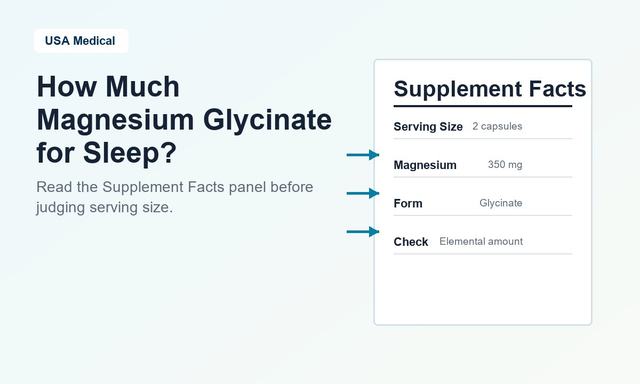
Dosage should be based on the product label and elemental magnesium amount.
Look for Elemental Magnesium
Elemental magnesium is the actual magnesium amount in the serving.
This is the number that matters most when reading a magnesium glycinate label. A product may list magnesium glycinate compound, but the Supplement Facts panel should tell you how much magnesium is provided per serving.
Check the label for:
- Serving size
- Magnesium per serving
- Form of magnesium
- Suggested use
- Other ingredients
- Warnings
Elemental magnesium is the key dosage number for magnesium glycinate.
Do Not Assume More Means Better Recovery
More magnesium does not automatically mean faster recovery.
Taking too much supplemental magnesium can cause loose stool, diarrhea, nausea, cramping, and other side effects. Very high intakes can be dangerous, especially for people with kidney disease or impaired kidney function.
Adults should pay attention to the supplemental magnesium upper limit unless a healthcare professional recommends otherwise. Also count magnesium from multivitamins, electrolyte powders, sleep blends, antacids, and laxatives.
The best magnesium glycinate dosage is label-based, consistent, and tolerable.
Start With the Suggested Use
The safest starting point is the suggested use on your specific product.
Do not copy a dosage from a random workout forum or assume that athletes need a much higher serving. Some people with intense training may have higher magnesium needs, but that does not mean everyone should take high-dose supplements.
Start with the label and ask a healthcare professional if your needs are more advanced.
For muscle recovery, magnesium glycinate dosage should be careful, label-based, and counted alongside all other magnesium sources.
Safety and Side Effects
Magnesium glycinate is generally well tolerated, but it can still cause side effects.
Possible Side Effects
Possible magnesium glycinate side effects include:
- Loose stool
- Diarrhea
- Nausea
- Stomach discomfort
- Cramping
These effects are more likely when the serving is too high or when magnesium glycinate is combined with other magnesium products. If side effects appear, review the label, check your total magnesium intake, reduce the serving if appropriate, or stop and ask a healthcare professional.
Magnesium glycinate is gentle for many people, but side effects are still possible.
Who Should Ask a Doctor First?
Some people should ask a doctor or pharmacist before taking magnesium glycinate.
Ask first if you:
- Have kidney disease
- Take prescription medications
- Are pregnant or breastfeeding
- Have heart rhythm concerns
- Use magnesium-containing antacids or laxatives
- Take antibiotics
- Take osteoporosis medications
- Have chronic digestive issues
Magnesium can interact with certain medications and may be risky for people whose kidneys cannot clear excess magnesium properly.
Magnesium glycinate is common, but it is not automatically right for everyone.
When to Stop
Stop taking magnesium glycinate and seek guidance if you experience:
- Severe diarrhea
- Vomiting
- Extreme weakness
- Difficulty breathing
- Irregular heartbeat
- Fainting
- Severe dizziness
- Symptoms that feel unusual or concerning
Serious symptoms should be treated as a reason to stop and get medical help.
A safe magnesium glycinate routine starts with the label, total intake awareness, and knowing when to ask for help.
Conclusion: Magnesium Glycinate Can Support Muscle Recovery, But It Is Not the Whole Plan
Magnesium glycinate may be a helpful part of a muscle recovery routine because magnesium supports normal muscle function, nerve function, energy production, and protein-related processes. It may also support sleep and relaxation, which are essential for recovery. But it is not a magic soreness cure or a replacement for training balance, protein, hydration, and rest. The best way to use magnesium glycinate for muscle recovery is to take the label-recommended serving consistently, pair it with strong recovery habits, and pay attention to how your body responds. For most people, its biggest advantage is simple: it is a gentle magnesium form that fits well into a nightly recovery routine.
Comments
Comments are coming soon. For now, send product questions to our support team and we will help you decide whether magnesium glycinate makes sense for your routine.