
Why People Ask About Magnesium Glycinate for Restless Legs
People ask about magnesium because restless legs symptoms often show up at night, when the body is trying to relax.
Restless Legs vs Leg Cramps
Restless legs syndrome and leg cramps are not the same thing.
Restless legs syndrome, often called RLS or Willis-Ekbom disease, is usually described as an uncomfortable urge to move the legs. It often gets worse during rest, especially in the evening or at night, and movement may temporarily relieve the feeling.
Leg cramps are different. A cramp is usually a sudden, tight, painful muscle contraction. Cramps can happen at night, after exercise, with dehydration, or for many other reasons.
People may search similar phrases, such as:
- Magnesium for restless legs
- Magnesium glycinate leg cramps at night
- Magnesium glycinate muscle relaxation
- Magnesium for nighttime leg discomfort
- Magnesium glycinate for muscle support
Those searches overlap, but the symptoms may have different causes.
Magnesium glycinate may fit muscle support routines, but true restless legs symptoms should not be treated as ordinary cramps.
Why Magnesium Comes Up
Magnesium comes up because it supports normal muscle and nerve function.
That makes it relevant to nighttime muscle comfort and relaxation routines. Many people take magnesium glycinate before bed because it is gentle and sleep-routine friendly. If a person has mild nighttime muscle tension or occasional cramps, magnesium glycinate may be part of a broader routine that includes hydration, stretching, and better sleep habits.
But RLS is more complex than low magnesium alone. Iron status, medications, pregnancy, kidney disease, nerve conditions, sleep apnea, and other factors may be involved.
Magnesium is relevant to muscle and nerve support, but restless legs symptoms can have causes that require medical evaluation.
Why Glycinate Is the Form People Choose
Magnesium glycinate is often chosen at night because it is generally considered gentle.
Compared with magnesium citrate or magnesium oxide, glycinate is less digestion-focused and more commonly used in sleep and relaxation routines. That matters because a supplement taken before bed should not create stomach discomfort or a strong bowel effect.
Magnesium glycinate may fit a nighttime routine for people who want:
- Gentle magnesium support
- Normal muscle function support
- Normal nerve function support
- A calm bedtime routine
- Less digestive disruption
- A non-sedating supplement option
Magnesium glycinate is popular for nighttime use because it is gentle and easy to include before bed.
People ask about magnesium glycinate for restless legs because the symptoms happen at night and magnesium supports normal muscle and nerve function, but that does not make it an RLS treatment.
What the Research Says About Magnesium and Restless Legs
The evidence for magnesium as a restless legs treatment is limited and mixed.
Magnesium Is Not an Established RLS Treatment
Magnesium is not currently the standard first-line treatment for restless legs syndrome.
Clinical discussions of RLS often focus on diagnosis, iron status, identifying underlying conditions, medication review, sleep disorders, and clinician-guided treatment options. Iron deficiency is especially important because low iron stores can be connected to RLS symptoms.
A healthcare professional may evaluate:
- Ferritin and iron studies
- Kidney function
- Medication triggers
- Pregnancy status
- Neuropathy or diabetes
- Sleep apnea
- Symptom severity
- Frequency and timing of symptoms
Magnesium may be discussed as a supplement, but it should not replace this evaluation.
Magnesium glycinate should not be positioned as a treatment for RLS when standard evaluation often starts with iron status and underlying causes.
Magnesium Research Is Inconclusive
Research on magnesium and restless legs has not produced a clear, definitive answer.
A 2019 systematic review found that available evidence was too limited to conclude whether magnesium helps RLS or periodic limb movement disorder. Some later studies have suggested possible benefits from magnesium or magnesium combined with vitamin B6, but these studies do not prove that magnesium glycinate specifically treats RLS.
This matters for honest marketing. The safe wording is:
Magnesium may support normal muscle and nerve function.
Magnesium glycinate may fit a nighttime relaxation routine.
People with restless legs symptoms should talk to a healthcare professional.
The evidence is not strong enough to claim magnesium glycinate treats restless legs syndrome.
Why People Still Consider It
People still consider magnesium glycinate because it is practical and gentle.
Even when evidence is limited for RLS specifically, magnesium remains an essential mineral. If someone does not get enough magnesium from food, a supplement may help support general muscle and nerve function. If magnesium glycinate helps someone build a calmer bedtime routine, that may also support better sleep habits.
The key is not to overstate it.
Magnesium glycinate may be reasonable for:
- Normal muscle function support
- Normal nerve function support
- Nighttime relaxation routines
- Muscle recovery routines
- People with low magnesium intake
- People who tolerate glycinate well
It should not be marketed as:
- A cure for RLS
- A guaranteed restless legs fix
- A replacement for iron testing
- A substitute for medical treatment
- A solution for severe symptoms
Magnesium glycinate may have a place in a wellness routine, but it should not replace diagnosis or care.
Current evidence supports cautious, expectation-setting language around magnesium and restless legs.
How Magnesium Glycinate May Support Nighttime Leg Comfort
Magnesium glycinate may support nighttime leg comfort by supporting normal muscle and nerve function.
Normal Muscle Function Support
Magnesium helps muscles function normally.
This is why many people use magnesium glycinate for muscle relaxation, muscle recovery, or nighttime tightness. If your legs feel tense after exercise, long standing hours, or a physically demanding day, magnesium glycinate may fit into a broader recovery routine.
A simple nighttime muscle support routine may include:
- Hydration
- Light stretching
- Magnesium glycinate
- A consistent bedtime
- Comfortable sleep environment
- Reduced caffeine late in the day
For more detail, read: Magnesium Glycinate for Muscle Recovery
Magnesium glycinate may support normal muscle function, especially as part of a complete nighttime recovery routine.
Normal Nerve Function Support
Magnesium also supports normal nerve function.
This is relevant because many uncomfortable leg sensations involve the nervous system. However, supporting normal nerve function is not the same as treating a neurological disorder. If symptoms feel like crawling, pulling, tingling, electric sensations, or an uncontrollable urge to move, it is worth discussing them with a clinician.
Magnesium supports normal nerve function, but persistent neurological sensations need medical context.
Sleep Routine Support
Restless or uncomfortable legs can make it harder to settle down.
Magnesium glycinate can fit into a sleep routine because it is gentle and bedtime-friendly. It may support relaxation without being a sedative. The routine itself matters because sleep quality is shaped by repeated cues.
A simple routine:
- Take magnesium glycinate with water.
- Dim the lights.
- Stretch lightly if helpful.
- Avoid late caffeine.
- Keep the room cool.
- Go to bed at a consistent time.
Magnesium glycinate may support a calmer bedtime routine, which may make nighttime discomfort easier to manage for some people.
Magnesium glycinate is best framed as support for muscle, nerve, and sleep routines, not as a direct RLS treatment.
When Restless Legs Symptoms Should Be Discussed With a Doctor
Persistent restless legs symptoms should be discussed with a healthcare professional.
Symptoms That Sound Like Restless Legs Syndrome
RLS symptoms often involve an urge to move the legs, usually with uncomfortable sensations.
You should consider talking to a clinician if symptoms:
- Are worse at rest
- Are worse in the evening or at night
- Improve temporarily with movement
- Make it hard to fall asleep
- Wake you up frequently
- Happen several nights per week
- Feel like crawling, pulling, tingling, aching, or electricity
- Interfere with daily energy or quality of life
These symptoms may need evaluation beyond supplements.
If symptoms match the pattern of RLS, magnesium glycinate should not be the only response.
Iron Deficiency Should Be Checked
Iron status is one of the most important clinical considerations in restless legs syndrome.
Many RLS resources recommend checking iron stores, often including ferritin. This is not something to guess at. Iron supplements can be harmful if used incorrectly, so iron should be taken under medical supervision when a deficiency or low iron stores are confirmed.
If restless legs symptoms are persistent, ask a healthcare professional whether iron testing is appropriate.
Medication and Health Conditions Can Matter
Some medications or health conditions can contribute to restless legs symptoms.
A clinician may review:
- Antidepressants
- Antihistamines
- Nausea medications
- Dopamine-blocking medications
- Kidney disease
- Pregnancy
- Diabetes
- Peripheral neuropathy
- Sleep apnea
- Alcohol, caffeine, or nicotine use
This is why treating symptoms with a supplement alone can miss the bigger picture.
Restless legs symptoms may be connected to medication or health factors that magnesium alone will not address.
Severe or New Symptoms Need Attention
Do not wait if symptoms are severe, sudden, or unusual.
Get medical advice if leg symptoms are:
- New and intense
- One-sided
- Associated with swelling
- Associated with weakness
- Associated with numbness
- Associated with severe pain
- Linked to shortness of breath or chest pain
- Making sleep impossible
Severe or unusual leg symptoms should be evaluated promptly.
Restless legs symptoms deserve medical attention when they are frequent, disruptive, severe, or neurologic in pattern.
Magnesium Glycinate for Leg Cramps at Night
Nighttime leg cramps are different from restless legs, but magnesium is often discussed for both.
Leg Cramps Feel Different
A leg cramp is usually a sudden, painful tightening of a muscle.
It may feel like the calf, foot, or thigh locks up. The pain can be sharp, and the muscle may feel hard or knotted. This is different from the restless urge to move that defines RLS.
Night cramps can be related to:
- Dehydration
- Training load
- Electrolyte balance
- Standing for long periods
- Pregnancy
- Certain medications
- Circulation or nerve issues
- Unknown causes
Leg cramps and restless legs can both happen at night, but they are not the same condition.
Magnesium Glycinate and Muscle Relaxation
Magnesium glycinate may support normal muscle function and muscle relaxation routines.
If you are using magnesium glycinate for nighttime leg cramps, keep the wording realistic. It may support normal muscle function, but it is not guaranteed to stop cramps.
A good routine may include:
- Hydration during the day
- Light calf stretching
- Balanced electrolytes
- Magnesium glycinate if tolerated
- Proper training recovery
- Medical review if cramps are frequent
Magnesium glycinate may be a useful muscle support supplement, but frequent cramps should be discussed with a clinician.
When Night Cramps Need Medical Advice
Ask a healthcare professional if cramps are frequent, severe, or unexplained.
This is especially important if cramps happen with swelling, weakness, numbness, medication changes, or circulation concerns.
Night cramps may have many causes, so magnesium should not be the only strategy when symptoms persist.
Magnesium glycinate may support nighttime muscle comfort, but cramps and restless legs should not be confused.
How to Use Magnesium Glycinate Safely
If you use magnesium glycinate, start with the label and your personal tolerance.
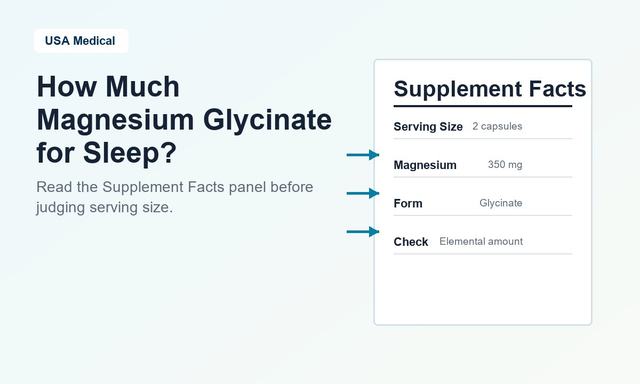
Read the Supplement Facts Panel
Before taking magnesium glycinate, read the Supplement Facts panel.
Check:
- Serving size
- Elemental magnesium per serving
- Form of magnesium
- Suggested use
- Other ingredients
- Warnings
- Servings per container
Elemental magnesium is the actual amount of magnesium in the serving. Do not rely only on the front of the bottle.
Safe magnesium use starts with the Supplement Facts panel.
Start Low and Watch Digestion
Magnesium glycinate is often gentle, but too much supplemental magnesium can cause side effects.
Possible side effects include:
- Loose stool
- Diarrhea
- Nausea
- Stomach discomfort
- Cramping
If side effects appear, scale back or stop. Do not treat diarrhea as a sign that magnesium is working.
Digestive side effects are a sign to review the serving size and total magnesium intake.
Count Other Magnesium Sources
Magnesium may already be in other products.
Check:
- Multivitamins
- Electrolyte powders
- Greens powders
- Sleep blends
- Antacids
- Laxatives
- Mineral complexes
Total supplemental magnesium matters more than any one supplement.
Count all supplemental magnesium sources before adding magnesium glycinate.
Ask a Doctor First If Needed
Some people should ask before using magnesium glycinate.
Ask a healthcare professional if you:
- Have kidney disease
- Take prescription medications
- Are pregnant or breastfeeding
- Use magnesium-containing antacids or laxatives
- Take antibiotics
- Take osteoporosis medications
- Have heart rhythm concerns
- Have chronic digestive issues
- Have persistent restless legs symptoms
For more detail, read: Magnesium Glycinate Side Effects and Who Should Ask a Doctor First
Magnesium glycinate is common, but safety depends on your health situation.
Magnesium glycinate should be used carefully, especially when symptoms may point to a medical condition.
Should You Try USA Magnesium Glycinate?
USA Magnesium Glycinate may fit a nighttime muscle and relaxation routine, but it should not be presented as an RLS treatment.
A Gentle Magnesium Option
If your goal is normal muscle function support, normal nerve function support, or a calmer bedtime routine, magnesium glycinate is a practical form to consider.
USA Magnesium Glycinate is designed around a simple idea: a gentle magnesium option for nighttime wellness routines.
Shop USA Magnesium Glycinate
USA Magnesium Glycinate can support a nighttime wellness routine, but it is not a treatment for restless legs syndrome.
Use It as Part of a Routine
A simple nighttime routine may include:
- Magnesium glycinate with water
- Light stretching
- Reduced caffeine
- Lower lights
- Consistent bedtime
- Clinician guidance for persistent symptoms
This keeps the supplement in the right role: supportive, not curative.
Magnesium glycinate works best when it supports a broader nighttime routine.
USA Magnesium Glycinate may be useful for gentle muscle and nerve support, but persistent restless legs symptoms should be discussed with a clinician.
Conclusion: Magnesium Glycinate May Support Muscle and Nerve Function, But Restless Legs Need Careful Attention
Magnesium glycinate is often searched for restless legs because people want nighttime relief from uncomfortable leg sensations. Magnesium supports normal muscle and nerve function, and magnesium glycinate is a gentle form that fits well into bedtime routines. But restless legs syndrome is a neurological condition, and magnesium glycinate should not be described as a treatment or cure. Current evidence on magnesium for RLS is limited and mixed. If symptoms are frequent, disruptive, severe, or match the classic pattern of RLS, talk to a healthcare professional. Magnesium glycinate may still support a calm nighttime routine, muscle relaxation, and normal nerve function, but it should be used responsibly and in the right context.
Comments
Comments are coming soon. For now, send product questions to our support team and we will help you decide whether magnesium glycinate makes sense for your routine.