
What Is Magnesium Glycinate?
Magnesium glycinate is a form of magnesium bound to glycine.
Magnesium Glycinate Definition
Magnesium glycinate is a dietary supplement made by combining magnesium with glycine, an amino acid found naturally in protein-containing foods.
You may also see it called:
- Magnesium bisglycinate
- Chelated magnesium glycinate
- Magnesium glycinate chelate
- Buffered magnesium glycinate
These names can look different on labels, but they usually refer to the same general idea: magnesium is attached to glycine to create a form that is commonly used for gentle daily supplementation.
Magnesium itself is the essential mineral. Glycine is the compound attached to it. Together, they create a form that is popular for people who want magnesium for sleep routines, relaxation routines, muscle support, and general wellness.
Magnesium glycinate is a gentle magnesium form made by combining magnesium with glycine.
What Does Magnesium Do in the Body?
Magnesium is involved in many normal body processes.
It helps support:
- Muscle function
- Nerve function
- Energy production
- Protein production
- Bone health
- Blood sugar regulation
- Blood pressure regulation
- Normal heart rhythm
This is why magnesium is considered an essential mineral. Your body needs it, but it does not make enough on its own. You get magnesium from food, beverages, and sometimes supplements.
Magnesium-rich foods include nuts, seeds, legumes, whole grains, leafy greens, milk, yogurt, and some fortified foods. Magnesium glycinate can help support intake when someone wants a consistent supplemental source.
Magnesium glycinate provides magnesium, and magnesium supports many essential functions throughout the body.
Why Is Glycine Added to Magnesium?
Glycine is added because it helps create the glycinate form.
The glycine part is one reason magnesium glycinate is often discussed for sleep and relaxation routines. Glycine itself is an amino acid, and it is associated with calm in many wellness conversations. However, the main purpose of magnesium glycinate is still to provide magnesium.
The practical benefit of the glycinate form is that many people find it easier to tolerate than some other forms. That matters because a supplement only helps if you can take it consistently.
Glycine helps create a magnesium form that is commonly chosen for gentle, routine-friendly use.
Magnesium glycinate is simply magnesium paired with glycine, but that pairing makes it one of the most popular magnesium supplements for daily and nighttime routines.
Why Do People Take Magnesium Glycinate?
People usually take magnesium glycinate for sleep, relaxation, muscle support, and general magnesium intake.
Magnesium Glycinate for Sleep
Magnesium glycinate is often used at night because it fits well into a bedtime routine.
Many people searching for the best magnesium for sleep end up comparing magnesium glycinate, citrate, oxide, malate, and threonate. Glycinate is usually one of the most sleep-friendly options because it is gentle, commonly taken at night, and less associated with strong bowel effects than citrate or oxide.
A simple magnesium glycinate sleep routine might look like this:
- Take magnesium glycinate with water.
- Dim the lights.
- Reduce screen time.
- Read or stretch lightly.
- Keep the room cool and dark.
- Go to bed at a consistent time.
Magnesium glycinate should not be expected to force sleep. It is not a sleeping pill. It may support a calmer routine, especially for people who do not get enough magnesium, but it works best when paired with good sleep habits.
Magnesium glycinate is popular for sleep because it is gentle and easy to include in a calming nighttime routine.
Magnesium Glycinate for Relaxation
Magnesium plays a role in normal nervous system function.
That is one reason people often use magnesium glycinate when they want to feel more settled in the evening. It may support a relaxation routine, especially when paired with habits like journaling, stretching, breathwork, lower lighting, or turning off work notifications.
It is important not to overstate this. Magnesium glycinate is not an anxiety treatment and should not replace professional care. But as part of a healthy routine, it may be a useful nutritional support tool.
Magnesium glycinate may support relaxation by helping maintain normal magnesium levels and nervous system function.
Magnesium Glycinate for Muscles
Magnesium supports normal muscle function.
People often use magnesium glycinate when they are thinking about muscle tension, exercise recovery routines, or nighttime muscle comfort. Magnesium helps muscles contract and relax normally, which makes it an important mineral for overall neuromuscular function.
That does not mean magnesium glycinate will fix every cramp, pain, or muscle issue. Muscle problems can come from hydration, training load, medications, nerve issues, circulation issues, electrolyte balance, or other medical causes.
Magnesium glycinate supports normal muscle function, but ongoing pain or cramping should be evaluated properly.
Magnesium Glycinate for Daily Magnesium Support
Some people take magnesium glycinate simply because they want a consistent magnesium supplement.
This may make sense for people who do not regularly eat magnesium-rich foods, prefer a gentle supplement form, or want to build a daily mineral routine. For many users, the best supplement is not the most aggressive one. It is the one they can take consistently without discomfort.
Magnesium glycinate is often used because it makes daily magnesium support simple and gentle.
People take magnesium glycinate because it is practical: it supports magnesium intake while fitting easily into sleep, relaxation, and daily wellness routines.
Magnesium Glycinate Benefits
The main benefits of magnesium glycinate come from magnesium itself plus the gentle nature of the glycinate form.
Supports Healthy Magnesium Intake
The most direct benefit is simple: magnesium glycinate helps provide magnesium.
This matters because many people do not consistently eat enough magnesium-rich foods. A supplement can help fill that gap when used appropriately. Magnesium is involved in hundreds of normal processes, so maintaining adequate intake is important for overall wellness.
Good food sources should still matter. Supplements are not a replacement for a balanced diet. The best approach is usually food first, then supplements when helpful.
Magnesium glycinate can help support healthy magnesium intake when diet alone is not consistent.
Gentle on Digestion for Many People
Magnesium glycinate is often chosen because it is generally considered gentle.
Some magnesium forms, especially citrate and oxide, may be more likely to loosen stool or create digestive urgency for certain people. Magnesium glycinate is commonly preferred when someone wants magnesium support without a strong laxative effect.
This is especially useful for nighttime routines. A supplement taken before bed should not make your stomach uncomfortable or interrupt your sleep.
Magnesium glycinate is often preferred because it is usually easier on digestion than some other forms.
Fits Sleep and Relaxation Routines
Magnesium glycinate is one of the most common magnesium forms for evening use.
It fits well into a wind-down routine because it is simple, calm, and not typically stimulating. Many people take it after dinner, after brushing their teeth, or 30 to 60 minutes before bed.
A good routine might include:
- Magnesium glycinate
- Water
- Dim lights
- Less screen time
- Reading or stretching
- Consistent bedtime
Magnesium glycinate works best when it becomes part of a repeatable sleep routine.
Supports Muscles, Nerves, Bones, and Metabolism
Magnesium is involved in more than sleep.
It helps support muscle and nerve function, contributes to bone health, and plays a role in energy and glucose metabolism. This is why magnesium glycinate can be useful even for people who are not specifically taking it for sleep.
Magnesium glycinate supports broad wellness because magnesium itself is used throughout the body.
Magnesium glycinate benefits are practical, not magical: it supports magnesium intake in a form many people can tolerate and use consistently.
Magnesium Glycinate vs Other Magnesium Forms
Magnesium glycinate is only one form of magnesium, and the right form depends on your goal.
Magnesium Glycinate vs Citrate
Magnesium citrate is magnesium bound to citric acid.
It is commonly used for magnesium support and occasional bowel regularity. It may be useful for people who want digestive support, but it can be less ideal for bedtime if it causes loose stool or urgency.
Magnesium glycinate is usually preferred when the goal is:
- Sleep
- Relaxation
- Gentle daily use
- Less digestive disruption
- Nighttime magnesium support
Magnesium citrate is usually preferred when the goal is:
- Occasional constipation support
- Bowel regularity
- A stronger digestive effect
- Short-term digestive use as directed
Magnesium glycinate is usually better for sleep and relaxation, while magnesium citrate is usually better when bowel regularity is the goal.
Magnesium Glycinate vs Oxide
Magnesium oxide is a common and inexpensive form.
It is widely available, but it is usually not the first choice for sleep or relaxation routines. It may also be more associated with digestive effects for some people.
Magnesium glycinate is typically a better fit when someone wants a gentle, sleep-friendly magnesium option.
Magnesium glycinate is generally more sleep-focused than magnesium oxide.
Magnesium Glycinate vs Malate
Magnesium malate is often discussed for daytime use, energy routines, and muscle support.
It may be a good option for some people, but it is not usually the first form people choose for bedtime. Magnesium glycinate tends to fit evening routines better because of its calming reputation and gentle profile.
Magnesium malate may fit daytime routines, while magnesium glycinate usually fits nighttime routines better.
Magnesium Glycinate vs Threonate
Magnesium threonate is often marketed for brain and cognitive support.
It is usually more expensive and chosen for a different reason than glycinate. If the goal is sleep, relaxation, or gentle daily magnesium support, magnesium glycinate is often the simpler option.
Magnesium glycinate stands out because it is one of the most practical forms for gentle daily and nighttime use.
Different magnesium forms serve different goals, and magnesium glycinate is usually the best match for sleep, relaxation, and gentle daily support.
How to Take Magnesium Glycinate
Magnesium glycinate should be taken according to the product label and your personal needs.
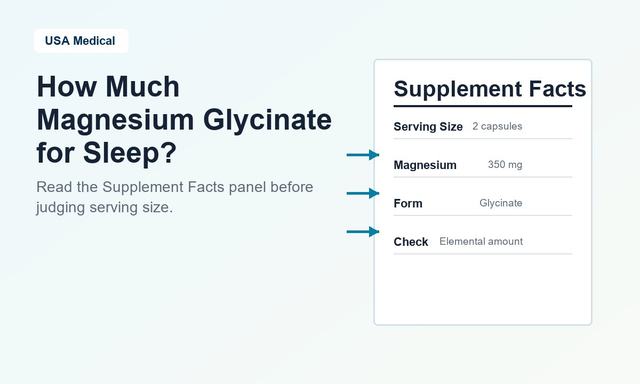
Read the Supplement Facts Panel
Before taking magnesium glycinate, read the Supplement Facts panel.
Look for:
- Serving size
- Magnesium per serving
- Magnesium form
- Suggested use
- Other ingredients
- Warnings
- Servings per container
Do not rely only on the front of the bottle. Marketing terms like "high potency," "sleep support," or "gentle" do not tell you the full dosage.
The Supplement Facts panel is the most important place to start.
Look for Elemental Magnesium
Elemental magnesium is the actual magnesium amount in the serving.
This is important because "magnesium glycinate" refers to the compound, not necessarily the amount of magnesium your body receives. The label should show the magnesium amount per serving.
For example:
| Label Detail | Why It Matters |
|---|---|
| Serving size | Tells you how many capsules or scoops equal one serving |
| Magnesium per serving | Tells you the actual magnesium amount |
| Magnesium form | Tells you whether it is glycinate, citrate, oxide, or another form |
| Suggested use | Tells you how the brand recommends taking it |
| Warnings | Helps identify safety concerns |
Elemental magnesium is the dosage number that matters most.
Choose a Consistent Time
The best time to take magnesium glycinate is the time you can repeat.
Many people take it at night because it fits sleep and relaxation routines. Others take it in the morning because breakfast is when they remember. Either can work if it follows the label and feels good for your body.
Common timing options include:
- After dinner
- After brushing your teeth
- 30 to 60 minutes before bed
- With breakfast
- With a daily supplement routine
Magnesium glycinate works best when you take it consistently.
Avoid Taking Too Much
More magnesium is not automatically better.
Too much supplemental magnesium can cause loose stool, diarrhea, nausea, cramping, and other side effects. You should also count magnesium from other supplements, such as multivitamins, electrolyte powders, sleep blends, antacids, and laxatives.
Magnesium glycinate should be used thoughtfully, especially if you already take other magnesium-containing products.
The best way to take magnesium glycinate is to read the label, focus on elemental magnesium, and build a routine you can follow consistently.
Magnesium Glycinate Side Effects and Safety
Magnesium glycinate is commonly well tolerated, but side effects and interactions are still possible.
Possible Side Effects
Magnesium glycinate may cause side effects, especially if the serving is too high.
Possible side effects include:
- Loose stool
- Diarrhea
- Nausea
- Stomach discomfort
- Cramping
These effects are more common when people take too much magnesium or combine multiple magnesium products. If side effects occur, review the label, reduce the serving if appropriate, or stop and ask a healthcare professional.
Magnesium glycinate is usually gentle, but it can still cause digestive side effects.
Medication Interactions
Magnesium can interact with certain medications.
This may include some antibiotics, osteoporosis medications, diuretics, and magnesium-containing medications such as antacids or laxatives. Magnesium may also affect how some medications are absorbed if taken too close together.
If you take prescription medications, ask your doctor or pharmacist before adding magnesium glycinate.
Magnesium glycinate should be checked against your medication routine before daily use.
Who Should Be Careful?
Some people should not start magnesium glycinate without guidance.
Ask a healthcare professional first if you:
- Have kidney disease
- Take prescription medications
- Are pregnant or breastfeeding
- Have heart rhythm problems
- Use magnesium-containing antacids or laxatives
- Have chronic digestive issues
- Have been told your magnesium is too high or too low
Kidney disease is especially important because healthy kidneys help remove excess magnesium from the body.
Magnesium glycinate is common, but not everyone should take it without professional guidance.
When to Stop and Ask for Help
Stop and seek guidance if you experience unusual or serious symptoms.
These may include severe diarrhea, vomiting, weakness, dizziness, irregular heartbeat, breathing problems, or symptoms that feel concerning. Serious magnesium problems are uncommon, but they can happen with excessive intake or impaired kidney function.
If magnesium glycinate causes concerning symptoms, stop using it and get medical advice.
Magnesium glycinate is generally gentle, but safe use still depends on dosage, health status, and medication awareness.
Who Should Consider Magnesium Glycinate?
Magnesium glycinate may be useful for people who want gentle magnesium support.
People Looking for Sleep Support
If your main goal is sleep, magnesium glycinate is one of the most popular forms to consider.
It fits well into a nighttime routine and is often preferred over citrate or oxide when digestive comfort matters. It may be especially useful for people who want a calming routine rather than an aggressive supplement.
Magnesium glycinate is a strong option for people building a sleep-focused magnesium routine.
People With Sensitive Digestion
If other magnesium forms have bothered your stomach, glycinate may be worth considering.
It is not guaranteed to be side-effect free, but many people find it gentler than citrate or oxide. This makes it easier to take consistently.
Magnesium glycinate may be helpful for people who want magnesium without strong digestive effects.
People Who Do Not Eat Many Magnesium-Rich Foods
If your diet is low in magnesium-rich foods, a supplement may help support intake.
Magnesium-rich foods include nuts, seeds, beans, lentils, whole grains, leafy greens, milk, and yogurt. If those foods are not part of your regular diet, magnesium intake may be worth reviewing.
Magnesium glycinate can help support magnesium intake when diet is inconsistent.
People Building a Nighttime Wellness Routine
Magnesium glycinate fits naturally into a calm evening habit.
A routine might include magnesium glycinate, water, dim lighting, stretching, journaling, and a consistent bedtime. This kind of system is often more useful than expecting one supplement to do all the work.
Magnesium glycinate is best for people who want a simple supplement that supports a broader wellness routine.
Magnesium glycinate may be a good fit if your goal is gentle, consistent magnesium support, especially at night.
Conclusion: Magnesium Glycinate Is a Gentle, Sleep-Friendly Magnesium Form
Magnesium glycinate is a form of magnesium bound to glycine. It is popular because it is gentle, commonly used at night, and easy to fit into sleep, relaxation, and muscle support routines. The main benefits come from magnesium itself, which supports muscle and nerve function, energy production, bone health, blood pressure regulation, and blood sugar regulation. The glycinate form matters because many people tolerate it well and can take it consistently. To use it wisely, read the Supplement Facts panel, check elemental magnesium, follow the suggested use, and ask a healthcare professional if you take medications or have health concerns.
Comments
Comments are coming soon. For now, send product questions to our support team and we will help you decide whether magnesium glycinate makes sense for your routine.