The FTC's 'All or Virtually All' Standard
The FTC says a marketer making an unqualified Made in USA claim should be able to prove that a product is 'all or virtually all' made in the United States. The standard applies to labels and can also apply to online marketing, seals, flags, maps, and other express or implied origin messages. [1] [2]
FTC guidance explains that final assembly or processing must occur in the United States, all significant processing must occur here, and all or virtually all ingredients or components must be made and sourced here. The product should contain no or negligible foreign content. [2]
Unqualified and Qualified Claims Are Not the Same
| Claim style | What it communicates | Evidence burden |
|---|---|---|
| Made in USA | The whole product is all or virtually all domestic | Broad substantiation across significant processing and inputs |
| Made in USA with imported ingredients | Domestic manufacture with disclosed foreign input | Records supporting both the U.S. process and qualification |
| Encapsulated in USA | A specific process occurred in the United States | Evidence for that process without implying broader origin |
| Bottled or packaged in USA | Packaging occurred in the United States | Evidence for packaging location |
| Ships from USA | Fulfillment starts in the United States | Shipping records; no manufacturing implication |
A qualified claim describes the amount or type of domestic content or processing. FTC guidance warns that even a qualified statement must be truthful, substantiated, and clear enough not to imply more U.S. content than actually exists. [2]
How the Standard Applies to Supplements
Supplements do not receive an automatic exception because they are capsules or powders. Ingredient origin can be central to the finished product, so a U.S. contract manufacturer or domestic bottling line does not by itself establish that the mineral, amino acid, capsule shell, or every other significant input is domestic.
FDA separately requires supplement labels to identify the product, Supplement Facts, ingredients, net quantity, and responsible business information. FDA also notes that it does not pre-approve dietary supplements for safety and effectiveness before sale. FDA label compliance and FTC origin substantiation are different responsibilities. [3]
A Buyer Checklist for U.S.-Origin Language
- Is the claim about the entire product or one process such as encapsulation?
- Does a flag or seal imply a broader origin than the words actually support?
- Are imported ingredients disclosed when the claim is qualified?
- Can the seller describe where significant processing occurred?
- Does the company distinguish manufacturing from packaging and fulfillment?
- Is the claim updated when suppliers or ingredient origins change?
USA Medical's Standard: Say Only What the Records Support
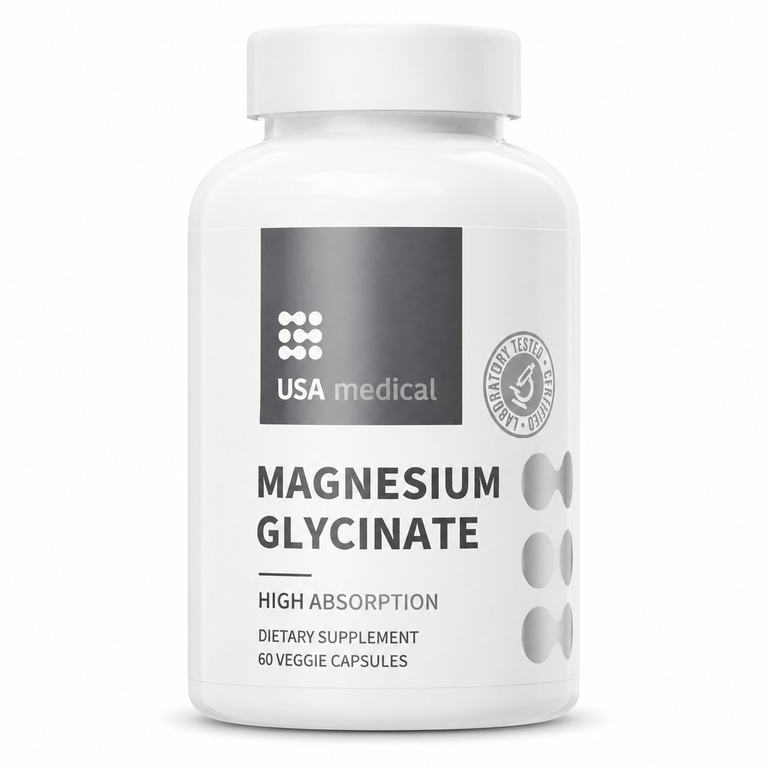
USA Magnesium Glycinate is made in the USA. The finished supplement is manufactured and encapsulated in a GMP-certified U.S. facility for USA Medical. That is a manufacturing fact, not a shortcut based on American packaging, warehousing, or shipping.
USA Medical documents raw-material sourcing separately from finished-product manufacturing. This keeps the product claim both clear and precise: the supplement is made here, while ingredient-origin records explain where each input comes from.
That is also why origin substantiation belongs in the same evidence system as formula specifications and COAs. Supplier records can change, and FTC guidance describes an ongoing obligation to review and update claims when the facts change. [2]
- Learn how USA Medical reads a COA See the evidence gate for identity, potency, contaminants, and traceability.
- Use the magnesium quality checklist Connect origin language with label and formula clarity.
Conclusion
'Made in USA' is a product-origin claim, not a patriotic design style. A precise process claim can be both meaningful and honest. The best supplement brands show which part happened here, what the records prove, and where the claim stops.